2026 Best Concrete Batching Plants for Your Business Needs?
The concrete industry is evolving rapidly, and the demand for efficient Concrete Batching Plants is at an all-time high. According to a report by IBISWorld, the concrete manufacturing industry in the U.S. is predicted to reach $45 billion by 2026. This growth highlights the importance of selecting the right batching plant for business needs. Experts emphasize that choosing the right equipment can significantly impact productivity and profitability.
Renowned industry expert Dr. Emily Turner states, "The future of construction heavily relies on the efficiency of Concrete Batching Plants." Her observations underline the technological advancements that influence plant designs and functionality. Modern batching plants offer automation, precision, and better resource management, which are crucial in meeting the ever-increasing demand for construction materials.
However, not every batching plant will suit your specific requirements. There are many types available, each with its strengths and weaknesses. Evaluating aspects such as output capacity, material compatibility, and operational costs is essential. The choice can determine not just short-term outcomes but long-term operational efficiency.
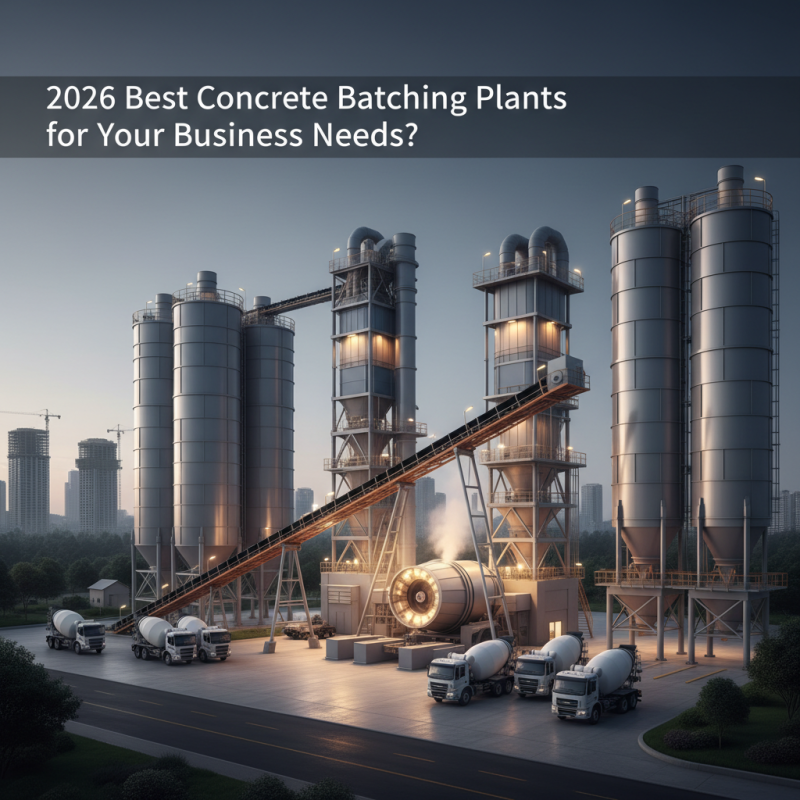
Types of Concrete Batching Plants Suitable for Different Applications
Concrete batching plants are essential for various construction projects. Different types serve distinct needs. A stationary batching plant is ideal for large-scale projects. It offers high production capacity and consistent mix quality. Reports suggest that stationary plants can produce up to 120 cubic meters of concrete per hour. This is beneficial for significant infrastructure projects.
On the other hand, mobile batching plants provide flexibility. They are easy to transport and set up. These plants are suitable for remote locations. They can produce around 30 to 90 cubic meters per hour. The choice of the plant depends on project size and location. For small or medium-scale projects, a volumetric batching plant might be a solution. It allows for precise measurement of ingredients, improving overall quality.
Quality control remains a vital concern. Many plants may not meet the required standards. Regular inspections and maintenance are necessary. Think about the long-term implications. Investing in the right type of batching plant can enhance productivity. However, choosing a subpar option may lead to costly mistakes. The industry demand is ever-evolving, creating a need for constant evaluation of plant types.
Key Features to Look for in a Quality Concrete Batching Plant
When selecting a concrete batching plant, several key features stand out. Efficiency is paramount; the ability to produce high volumes of concrete consistently can make or break a project. According to industry reports, batching plants that utilize advanced technology can achieve an up to 15% increase in production rates. Reliable mixing is another critical aspect. Quality plants ensure uniformity in the concrete mix, which is essential for structural integrity.
Operational flexibility is also vital. A good batching plant should adapt to different project needs, including various concrete specs. Industry statistics show that plants with modular designs can adjust more swiftly to changing demands, which improves overall responsiveness. Cost-effectiveness cannot be ignored either. While initial investments may seem high, long-term savings from reduced downtime and maintenance should guide your choice.
Safety features should never be overlooked. A lack of emphasis on safety can lead to costly accidents, impacting both employees and projects. Regular safety audits, which 30% of plants reportedly fail, highlight the ongoing need for vigilance. Prioritizing a batching plant that demonstrates safety compliance can mitigate risks effectively. Balancing these features ensures you make a more informed investment that aligns with your business needs.
2026 Best Concrete Batching Plants for Your Business Needs - Key Features to Look for in a Quality Concrete Batching Plant
| Model | Production Capacity (m³/h) | Mixing Type | Weight (kg) | Energy Consumption (kWh) | Control System |
| Model A | 90 | Twin Shaft | 20000 | 150 | Automatic |
| Model B | 120 | Planetary | 25000 | 180 | Manual |
| Model C | 75 | Single Shaft | 18000 | 120 | Automatic |
| Model D | 110 | Twin Shaft | 23000 | 160 | Semi-Automatic |
Top Brands and Models in the Market for 2026
As concrete manufacturing evolves, selecting the right batching plant is crucial for businesses. The 2026 market showcases innovative models that focus on efficiency and sustainability. Based on industry forecasts, global demand for concrete equipment is set to reach $12.1 billion by 2026, marking a pivotal moment for businesses to invest wisely.
Several leading brands are prioritizing automation and user-friendly technologies. Recent surveys indicate that nearly 70% of operators prefer models with enhanced control systems. This reflects a trend toward greater precision in mix designs, driving productivity and reducing material waste. Upgrading to the latest batch plants can lead to a decrease in operational costs by up to 15%. However, the balance between advanced features and affordability remains challenging for many.
Some models may promise high capacity but fall short in energy efficiency. Choosing a plant that meets environmental regulations while optimizing performance is essential. As the industry shifts towards eco-friendly practices, plants with integrated recycling systems are gaining traction. Companies must remain vigilant and flexible, continuously evaluating their equipment against industry standards and market demands. Ignoring these changes can lead to missed opportunities in a competitive landscape.
2026 Best Concrete Batching Plants Performance Comparison
Cost Considerations and Budgeting for Batching Plant Purchase
When investing in a concrete batching plant, cost considerations are crucial. The purchase price can vary significantly based on plant size, capacity, and technology. You need to assess your specific needs. A larger plant may have higher upfront costs but can deliver better efficiency. Think carefully about production capacity versus your budget.
Maintenance and operational costs also impact the overall investment. Regular maintenance is essential to ensure smooth operation. Additionally, factors like energy consumption can add to ongoing expenses. Consider these elements when budgeting. Sometimes, higher initial investments lead to lower costs in the long run.
Understanding the market is important. Prices may fluctuate based on economic conditions. Being timely could save you money. Don’t hesitate to seek expert advice. Exploring financing options can also ease budget constraints. However, always weigh the terms and conditions carefully. Keep in mind; a careful buying decision today sets the stage for future success.
Maintenance and Longevity Tips for Your Concrete Batching Plant
Maintaining a concrete batching plant is essential for its longevity and operational efficiency. Regular maintenance can reduce downtime significantly. According to the National Ready Mixed Concrete Association, improper maintenance can lead to a 30% increase in operational costs over time. Small issues can quickly become major failures if not addressed early.
Daily checks should include inspecting mixers and belts for wear and tear. Ensure that aggregate bins are clean and free of debris. Calibration of scales and moisture sensors is vital for accuracy in batching. Inadequate maintenance can lead to fluctuations in concrete quality, which can ultimately affect project timelines.
Training staff on maintenance procedures is crucial. Studies show that companies with trained personnel experience 25% fewer equipment-related issues. This investment in knowledge promotes accountability. However, many companies overlook the importance of consistently documenting maintenance activities. This oversight can lead to gaps in tracking maintenance history, which impacts overall performance and reliability. Adopting a proactive maintenance strategy ensures that your batching plant remains a cornerstone of your operations.