Why Choose a Prefab Container House for Your Next Home?
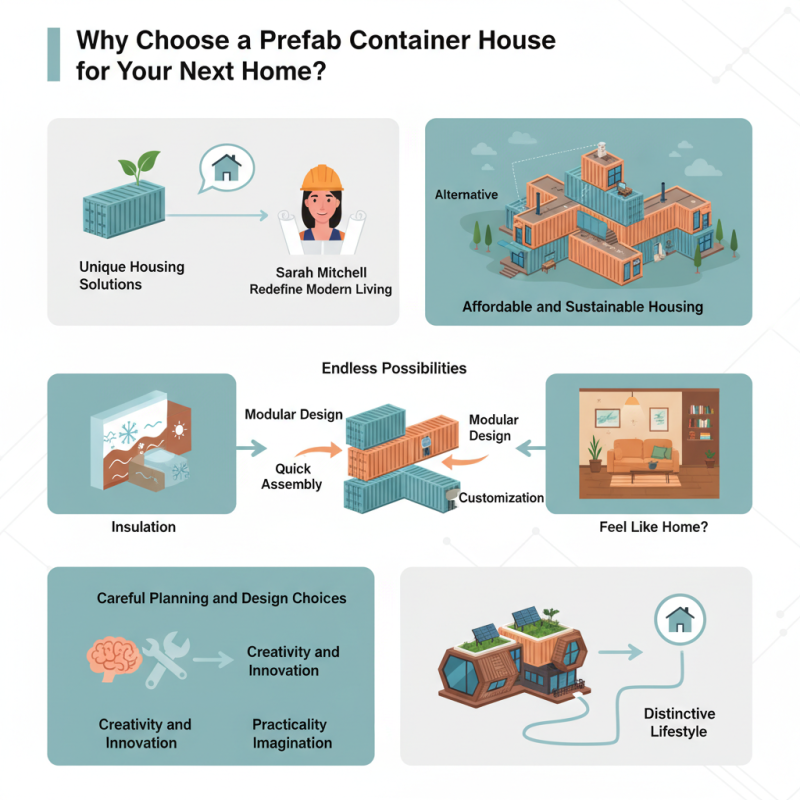
Many people are exploring unique housing solutions today. The Prefab Container House offers an intriguing alternative. Leading architect, Sarah Mitchell, once stated, "Prefab Container Houses can redefine modern living." This underscores a growing trend in affordable and sustainable housing.
Prefab Container Houses are not just boxes; they offer endless possibilities. Their modular design allows for quick assembly and customization. However, they require careful planning and design choices. The idea of living in a container might raise questions. What about insulation? Will it feel like home?
Despite potential concerns, many find their charm appealing. These homes often reflect creativity and innovation. Choosing a Prefab Container House involves a balance between practicality and imagination. It's a journey worth considering for those seeking a distinctive lifestyle.
Benefits of Prefab Container Houses for Modern Living
Prefab container houses are gaining popularity in modern living. These homes offer unique benefits that appeal to many. First, they are highly customizable. Homeowners can design layouts that fit their lifestyle. From open spaces to cozy nooks, the choices are endless.
Energy efficiency is another significant advantage. Many prefab container houses use sustainable materials and efficient designs. This reduces energy consumption. Moreover, they often feature large windows. Natural light fills the space, creating an inviting atmosphere. However, it’s essential to consider insulation. Not all container homes retain heat effectively.
Cost is also a factor. Prefab container homes can be more affordable than traditional houses. This makes homeownership more accessible. Yet, the initial setup costs can still be high. Delivery and site preparation require careful planning. Potential homeowners should reflect on their options and budget. Despite these challenges, the benefits make container homes worth exploring.
Cost-Effectiveness of Building with Container Homes
Container homes have surged in popularity, largely due to their cost-effectiveness. One major saving is in materials. Shipping containers are often repurposed, reducing the need for new building supplies. This reuse minimizes waste and offers a sustainable option. The overall construction process is also faster. Reduced labor time means lower expenses.
Moreover, the design flexibility of container homes can lead to significant savings. Owners can customize the layout according to their budget. Simple designs cost less while still providing comfort. However, this flexibility comes with challenges. Not every design is feasible or practical. Builders must balance aesthetics with function.
There are hidden costs to consider, too. Site preparation may require additional expenses. Insulation and utilities can add up quickly if not planned carefully. It’s essential to research and budget thoroughly. Each choice impacts the overall cost of the project. Container homes offer many advantages, but careful planning is crucial for a successful transition.
Sustainability and Eco-Friendliness of Container Structures
Container houses are gaining popularity for their sustainability and eco-friendliness. These structures utilize recycled shipping containers, reducing waste and promoting resource efficiency. According to recent reports, using a single recycled container can save over 2,000 kg of steel. This process significantly lowers the carbon footprint associated with traditional building materials.
Building with containers often requires less energy than standard homes. They provide excellent insulation, leading to reduced heating and cooling costs. A study found that container homes can be 30% more energy-efficient than conventional houses. Smaller living spaces also encourage minimalism. This lifestyle can lead to a decrease in consumerism and environmental impact.
Tip: Consider incorporating renewable energy sources. Solar panels can enhance sustainability and reduce utility bills.
Employing eco-friendly designs can maximize natural light and ventilation. Through thoughtful planning, container homes can minimize energy use, aligning with sustainable living principles. However, not all designs effectively achieve this goal. It’s essential to reflect on your layout and orientation to optimize energy efficiency.
Why Choose a Prefab Container House for Your Next Home? - Sustainability and Eco-Friendliness of Container Structures
| Category | Advantages | Environmental Impact | Considerations |
| Material Reuse | Utilizes shipping containers that would otherwise go to waste | Reduces landfill waste and encourages recycling | Condition of reused materials must be assessed |
| Energy Efficiency | Can be designed for solar energy and better insulation | Lowers energy consumption and carbon footprint | Initial setup costs for solar systems can be high |
| Affordability | Often cheaper than traditional building materials | Saves on resource extraction and processing costs | Financing options might be limited |
| Modular Design | Easily customizable and scalable to different needs | Flexibility reduces overall material wastage | Zoning laws may restrict certain designs |
Versatility and Customization Options in Prefab Housing
Prefab container houses offer remarkable versatility and a wealth of customization options. These homes can be designed to suit various lifestyles, from minimalist to luxurious. Recent studies indicate the prefab housing market is expected to grow by 20% over the next five years. This growth is largely due to the customization capabilities that attract many potential homeowners.
Designers can modify layouts, colors, and materials to meet individual preferences. Some homeowners are even opting for multi-container structures, creating spacious and unique living areas. However, it is essential to consider local zoning laws and building codes, as these can impact customization options. Not every location is open to container houses, leading to potential limitations.
**Tip:** Always research local regulations before diving into design plans. Consider visiting existing container homes for inspiration. You’ll gain ideas but also witness potential challenges. While customization is a huge benefit, overextending one's budget can lead to regret. It’s easy to be swept up in design dreams but practical planning is essential. Each decision should balance aesthetic desires with functional necessities.
Quick Construction Times Compared to Traditional Homes
Prefab container houses offer rapid construction times compared to traditional homes. They can be assembled in a matter of weeks. In contrast, traditional builds often require several months or even years. According to industry reports, the average construction time for prefab homes is about 50-70% shorter than conventional methods. This speed can significantly reduce labor costs and allow for quicker occupancy.
Creating a prefab container house does come with its challenges. Not every design fits the standard dimensions of containers. Customization can add time and expense. Additionally, site preparation might take longer than expected. These factors need consideration when planning your build. It’s essential to evaluate local regulations too, as some areas have restrictions.
Tip: Consider modular designs that incorporate multiple containers for more intricate layouts. This approach can maximize space. Remember, think about insulation and energy efficiency early in the process. Proper insulation can lead to long-term savings.