How to Choose the Best Solar Power Providers for Your Needs?
Choosing the right solar power providers can significantly impact your energy savings and environmental footprint. In recent years, the solar industry has grown rapidly, with U.S. solar generation projected to reach 30% of total electricity by 2030, as per the Solar Energy Industries Association (SEIA). This expansion brings numerous options, but not all providers deliver the same quality or service.
Assessing providers requires careful consideration. Look for firms with positive customer reviews, solid warranties, and transparent pricing. A 2021 survey revealed that 76% of homeowners ranked quality of service as a crucial decision factor. Yet, many consumers overlook critical elements, like installation experiences and post-installation support. Without thorough research, homeowners might choose a provider based solely on cost, leading to regrets later.
The solar energy landscape is complex. Each region has specific regulations and incentives. Understanding these can help in making informed decisions. It's essential to compare multiple solar power providers, as this ensures finding a perfect match for your energy needs. Being diligent in your selection process can lead to long-term benefits.

Understanding Your Energy Needs for Solar Power Solutions
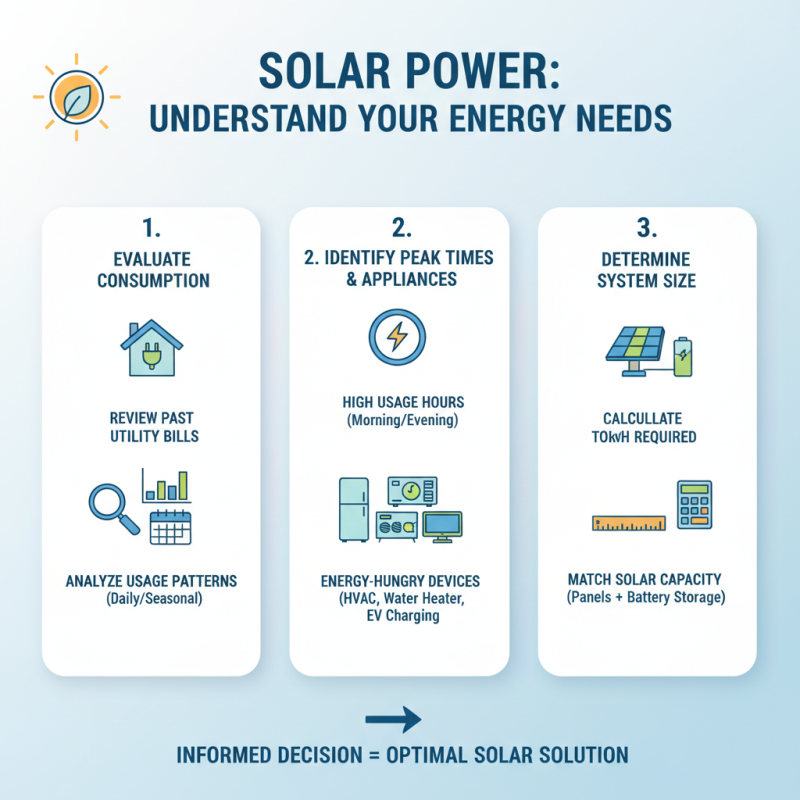
Understanding your energy needs is essential when considering solar power solutions. Start by evaluating your current energy consumption. Look at your past utility bills. Identify your peak usage times and the appliances that consume the most energy. This data will help you determine the size and capacity of the solar system you require.
Not everyone has the same energy needs. Families may use significantly more power than a single person. If you work from home, your consumption might be higher. Consider your future needs too. Are you planning to purchase an electric vehicle? Anticipating changes can influence the system size. A good solar provider should help you analyze these details.
Sometimes, we overlook certain aspects. Roof space may limit installation options for some homes. Not all roofs have optimal sun exposure. Trees and buildings can create shade. Reflect on these limitations as you plan. Discuss them with potential providers to find the best solutions tailored for you.
Researching Solar Power Providers in Your Area
When researching solar power providers in your area, start with local options. Checking online reviews can help you gauge customer satisfaction. Don't rely solely on ratings; personal experiences matter too. Visit community forums or social media groups for genuine feedback.
Tips: Look for providers that offer free consultations. This can help you understand your needs better. Also, pay attention to warranties. They can indicate the provider's confidence in their products.
Take note of installation timeframes. Unexpected delays can affect your project. Ask potential providers about their timelines. Transparency is key in such discussions. Ultimately, trust your instincts. If something feels off, it probably is. Choose a provider that communicates clearly and respects your time.
Evaluating Provider Certifications and Industry Experience
Choosing a solar power provider is crucial. Certifications indicate expertise and reliability. Look for providers with recognized certifications. These set standards for quality and service.
Industry experience matters significantly. A company with years of service likely has encountered various challenges. They can handle unexpected issues better than newer players. Experience often correlates with customer satisfaction too.
Consider their past projects. Check references and customer feedback. Small details matter in solar installations. Misalignment or poor quality can lead to inefficiency. Reflect on what you truly need. It's essential to align your expectations with what the provider offers.
Comparing Solar Panel Technologies and Installation Services
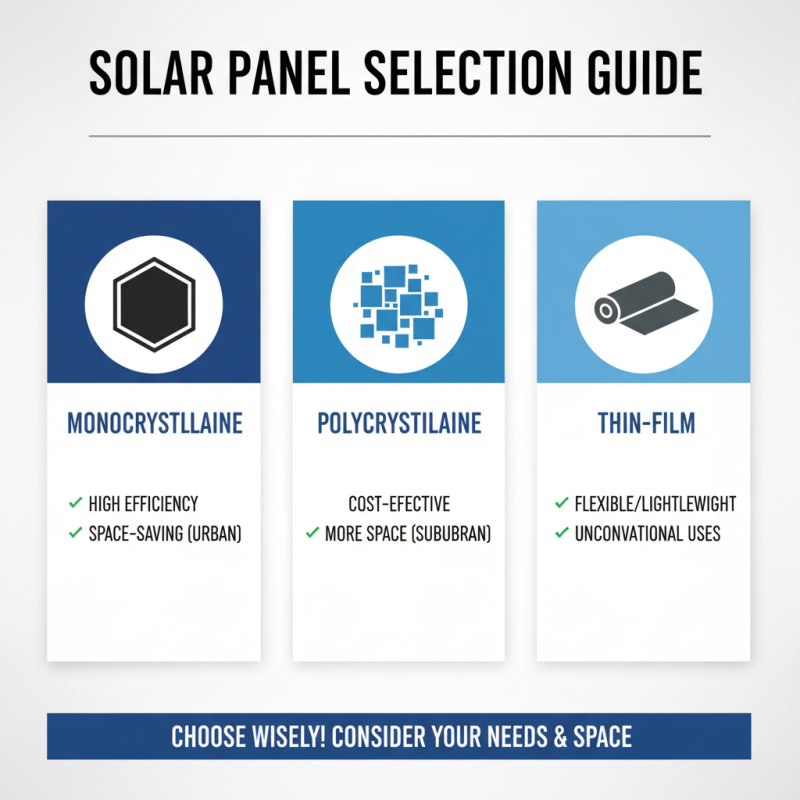
When selecting a solar power provider, understanding the different technologies and installation services is crucial. There are mainly three types of solar panel technologies: monocrystalline, polycrystalline, and thin-film. Monocrystalline panels are efficient and space-saving, often chosen for urban settings. In contrast, polycrystalline panels are less expensive but require more space due to their lower efficiency. Thin-film panels are lightweight and flexible, making them suitable for unconventional installations. Knowing the benefits and drawbacks of each type helps inform your decision.
Installing solar panels is another critical aspect. Professional installation services can vary widely. Some companies offer comprehensive packages, while others may only provide the panels. It’s important to assess how experienced the installers are. A qualified team will ensure proper fittings and maximize efficiency. Discount services, while tempting, may cut corners. It's wise to investigate the credentials and reviews of potential installation services. Often, the cheapest offer does not guarantee the best outcome. You may face issues later if shortcuts are taken.
Reflect on your energy needs and available space. Balancing budget with quality can be difficult. Comparing multiple providers will highlight the variations in service and technology. Take your time; this is a long-term commitment. Each choice will impact your energy production and maintenance costs for years. Good decisions hinge on thorough research and honest evaluation.
Assessing Customer Reviews and After-Sales Support Options
When choosing a solar power provider, customer reviews are a vital resource. They offer insights into the experiences of past clients. Look for feedback that discusses installation quality, equipment performance, and customer service. Pay attention to patterns; consistent issues can be a red flag. Sometimes, a few glowing reviews can mask deeper problems.
After-sales support is equally important. A good provider should offer reliable maintenance services and be responsive to inquiries. Assess their warranty options and how long they last. A strong commitment to customer support shows a provider’s confidence in their product. It’s worth considering providers who provide easy access to help.
Reflect on your own needs and expectations. What kind of support would you require over time? Are you willing to invest in a service with better after-sales care? Balancing cost with quality is essential in this process. An informed choice can lead to a satisfactory solar experience.