
Skip to content

What Is a Compact Radiator and How Does It Work?

A Compact Radiator is a small heat exchanger designed to remove heat from an engine, machine, or heating system. Its reduced size suits tight engine bays, lightweight vehicles, and space-limited equipment. However, compact does not automatically mean weak or inefficient.

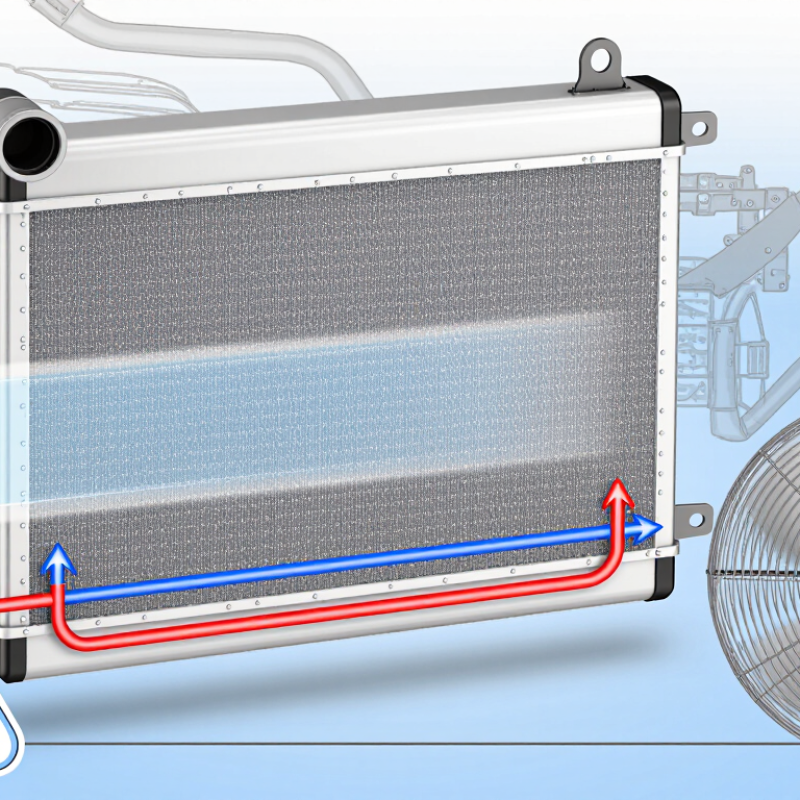
Inside the radiator, hot coolant flows through narrow aluminum tubes. Thin fins surround those tubes and increase the available surface area. Air then passes across the fins, carrying heat away from the coolant. A fan may assist when natural airflow is insufficient. The cooled liquid returns to the engine, and the cycle continues.

Dr. John H. Lienhard V, a respected heat-transfer authority, states, “Heat transfer is energy in transit due to a temperature difference.” This principle explains the radiator’s basic operation. Greater temperature differences usually encourage faster heat movement. Airflow, coolant speed, fin design, and material choice also matter.

In practical inspection work, the details become visible. A blocked fin can look harmless but restrict airflow. A small leak may leave a pale crust near a tube joint. A damaged fan can turn an effective radiator into an overheating risk.

The label can mislead.

This guide examines what a Compact Radiator is, how it works, and where its design has limits. It also considers installation, maintenance, efficiency, and common selection mistakes. A compact model may save valuable space, yet it can demand cleaner airflow and more careful sizing. That trade-off is easy to overlook.Winvalid
What Is a Compact Radiator and How Does It Work?

Definition and Core Features of a Compact Radiator

A compact radiator is a small heating unit designed to deliver useful room heat from limited wall or floor space. It may use hot water, steam, or electricity. Its core action is simple: a heated surface transfers energy through radiation, while surrounding air warms and circulates by convection. Many models use thin panels, internal fins, or closely spaced tubes to increase surface area without becoming bulky.

Size alone does not define performance. Heat output depends on water temperature, room temperature, material, and airflow around the unit. Under EN 442 testing, radiator output is commonly measured at 75/65/20°C conditions. Lower-temperature systems produce less heat unless the radiator has greater surface area. That distinction matters. A 600-millimetre unit can perform very differently from another with the same height. Check the declared wattage, connection position, operating pressure, and control compatibility before installation.

The International Energy Agency’s Buildings 2023 report states that buildings consume about 30% of global final energy. The U.S. Energy Information Administration’s 2020 Residential Energy Consumption Survey reports space heating at roughly 42% of household energy use. These figures explain why accurate sizing matters. A compact radiator can free space beneath a window, respond quickly, and support room-by-room control. However, the term “compact” is not perfectly standardized. A shallow panel may fit a narrow wall but offer modest output. Real rooms are messier. Curtains, furniture, insulation, and open doors can change results. A practical assessment should compare heat loss with certified output, not appearance alone.

What Is a Compact Radiator and How Does It Work?

A compact radiator is a wall-mounted steel panel radiator designed to transfer heat from hot water to indoor air. Water warms the metal panel, while convection fins increase the surface area and improve heat circulation.

The chart shows representative nominal heat output per metre of radiator length at a 50°C water-to-room temperature difference. More panels and convector-fin layers generally provide greater heat output, but actual performance depends on radiator size, water temperature, installation, and room conditions.

Main Components and Their Functions

A compact radiator is a small heat exchanger designed to remove heat where space is limited. It transfers heat from a liquid to surrounding air. The liquid may be coolant, oil, or water, depending on the equipment. Size alone does not determine performance. Airflow and surface area matter just as much.

The core is the working center. It contains narrow tubes and thin fins. Hot liquid travels through the tubes, while air moves across the fins. The fins spread heat over a larger area. They must remain straight and reasonably clean. Bent fins can restrict airflow. End tanks collect and redirect the liquid at each side of the core. Seals and joints prevent leaks, although small fittings deserve close inspection.

A fan pushes or pulls air when natural movement is insufficient. A pump keeps the liquid circulating, and a thermostat or control valve helps regulate temperature in many systems. Mounting brackets reduce vibration and protect connections from strain. During maintenance, I look for damp spots, crusty deposits, loose brackets, and uneven fin temperature. These clues often reveal trouble before overheating occurs. Still, diagnosis is not perfect. A cool-looking core can hide internal blockage, and a strong fan cannot compensate for poor circulation. The radiator works as a system, not as an isolated metal box.

How Heat Moves Through a Compact Radiator

What Is a Compact Radiator and How Does It Work?

How Heat Moves Through a Compact Radiator

A compact radiator transfers heat from a hot fluid to surrounding air. The fluid enters through narrow tubes and warms their metal walls. Heat then travels through the metal by conduction. Air moves across the tubes and fins, carrying heat away through convection. Radiation contributes slightly, but moving air usually does most of the work.

Small fins matter. They create far more surface area without greatly increasing the radiator’s size. Air needs a path. A fan can improve airflow, while blocked passages reduce cooling performance. The temperature difference also matters: hotter fluid and cooler air usually produce faster heat transfer. However, airflow that is too strong may increase noise and pressure loss.

In practical inspections, a radiator can feel hot while still working poorly. Uneven temperatures may indicate trapped air, restricted flow, or dirt between the fins. A clean outer surface does not prove the internal passages are clear. Real systems are less tidy. I have found that temperature readings from several points reveal more than one surface check. The design also involves compromise. Thicker tubes may improve durability, but they can slow heat movement and add weight. Even a compact radiator needs balanced fluid flow, open airflow, and reliable contact between its parts.

Common Types and Installation Methods

A compact radiator is a small heating unit designed to warm rooms without taking much wall or floor space. It usually transfers heat through water, electricity, or a combination of metal fins and airflow. In a water-based system, hot water enters the radiator, warms its metal body, and leaves cooler through the return pipe. The heated surface then raises room temperature through radiation and natural convection.

Common types include panel radiators, vertical radiators, towel radiators, and electric convector models. Panel units suit bedrooms and living rooms with limited wall width. Vertical models use height instead of width, though they need strong wall support. Towel radiators fit bathrooms and can warm fabric while reducing dampness. Electric models often install more easily, but their running cost depends on insulation and local electricity prices. Measure carefully.

Installation methods vary with the heating source and wall structure. A plumber may connect a water radiator to existing flow and return pipes, then fit a thermostatic valve for temperature control. Electric units require a suitable circuit and safe clearance from water sources. Wall brackets must match the radiator’s weight and the wall material. Leave space below the unit for airflow, usually around 100 millimetres. Bleed trapped air from water radiators after installation, but do not force a stiff valve. I have found that small measuring errors can create noisy pipes or uneven heating, so checking pipe alignment twice is worthwhile. Proper sealing, level placement, and a final leak test support reliable performance.

Benefits, Limitations, and Typical Applications

A compact radiator is a small hydronic heating unit designed to deliver useful heat from limited wall space. Hot water flows through narrow steel or aluminium channels. These channels warm surrounding fins, which release heat through convection and mild radiation. A thermostatic valve controls water flow and room temperature. The U.S. Department of Energy identifies hydronic heating as a practical method for distributing heat through buildings.

Its main benefit is space efficiency. A slim radiator can fit beneath a window, inside a narrow hallway, or in a small bathroom. Modern units also respond faster than heavy cast-iron models. That can improve comfort in rooms with changing occupancy. The International Energy Agency reports that buildings consume about 30% of global final energy. Better heat control therefore matters, even with a small appliance. Compact radiators also create less visual obstruction. Less clutter helps.

Limitations remain. Their heat output depends on water temperature, surface area, insulation, and airflow around the panel. Furniture placed directly in front can reduce performance. Low-temperature heat pumps may require larger radiators or additional panels. The U.S. Energy Information Administration’s 2020 Residential Energy Consumption Survey found that space heating represented about 42% of household energy use. Poor sizing can waste this energy through overheating or frequent cycling. A compact radiator suits bedrooms, offices, apartments, renovations, and well-insulated homes. It is less suitable for large, poorly insulated rooms without careful heat-loss calculations. That judgment should be checked on site.

What Is a Compact Radiator and How Does It Work? - Benefits, Limitations, and Typical Applications
Data Dimension Typical Data or Specification How It Works or Why It Matters
Definition A space-efficient hydronic heating emitter, commonly made from formed steel panels with internal water channels and convector fins. Hot water flows through the internal channels, transferring heat to the metal panels and fins. The heated surfaces then warm the room through convection and thermal radiation.
Primary Heat Source Hot water supplied by a boiler, heat pump, district-heating system, or other hydronic heat source. The radiator does not normally generate heat by itself. Its performance depends on the temperature and flow rate of the water supplied by the heating system.
Heat-Transfer Methods Natural convection combined with thermal radiation. Convector fins encourage warm air to rise while cooler air enters from below. The exposed front panel also radiates heat toward nearby surfaces and occupants.
Common Construction Low-carbon steel panels, welded water passages, and folded or corrugated steel convector fins. Steel provides a practical balance of strength, manufacturability, heat transfer, and cost. Protective coatings are commonly applied to reduce corrosion and improve appearance.
Typical Configuration Single- or double-panel units; models with one or two rows of convector fins are common. Adding panels and fin rows increases the heat-emitting surface area without requiring a proportionally larger wall footprint. Deeper models generally provide higher output than shallow models of the same length.
Typical Height Range Approximately 300–900 mm, depending on the installation and product type. Lower units are useful beneath windows or in rooms with limited wall height. Taller units can provide more output where floor and wall width are restricted.
Typical Length Range Approximately 400–3,000 mm, with many residential installations using shorter lengths. Longer radiators provide more heat-emitting surface. The required length should be selected from the room heat-loss calculation rather than by room size alone.
Operating Temperature Often designed for water systems ranging from approximately 45°C to 80°C, depending on the heat source and system design. Lower water temperatures can reduce radiator output, so low-temperature systems may require larger radiators, additional panels, or increased surface area.
Heat Output Basis Output is normally stated in watts and tested at a specified water-to-room temperature difference, commonly ΔT50 or another declared rating condition. A radiator rated at one temperature condition cannot be compared directly with a radiator rated at another condition unless the test basis is converted consistently. Actual output varies with flow temperature, return temperature, and room temperature.
Response to Temperature Changes Moderate response speed; steel panel radiators usually heat up and cool down faster than heavy cast-iron radiators of similar output. The relatively low mass of the steel panels allows the radiator to respond reasonably quickly to thermostat adjustments, although the water volume and system controls also affect response time.
Main Benefits Compact wall footprint, broad size selection, relatively low weight, simple installation, and compatibility with many hydronic systems. These characteristics make compact radiators practical where wall space is limited or where a clean, unobtrusive heating solution is required.
Energy Efficiency Consideration The radiator itself does not create energy savings automatically; system efficiency depends on heat-source efficiency, controls, insulation, flow temperatures, and correct sizing. A correctly sized radiator can operate effectively at lower water temperatures, particularly when paired with suitable controls and a high-efficiency heat source.
Space Requirements Usually installed on a wall, often below a window; required depth commonly increases with the number of panels and fin rows. Positioning below a window can help counter cold downdraughts, but adequate clearance is needed around the radiator to allow air circulation and maintenance access.
Installation Requirements Requires suitable wall supports, correctly sized pipe connections, air venting, isolation valves, and a balanced hydronic circuit. Poor support, trapped air, incorrect valve selection, or inadequate system balancing can cause noise, uneven heating, reduced output, or premature wear.
Maintenance Generally low maintenance; occasional dust removal, air venting, inspection for leaks, and checking of valves are recommended. Dust accumulation between fins can reduce airflow and heat transfer. Air trapped inside the radiator can create cold areas and reduce effective heating performance.
Limitations Requires a hydronic heating circuit, may need a larger unit in low-temperature systems, and can be vulnerable to corrosion if system water quality is poor. It is not normally suitable as a standalone heater without a water-based heat source. Furniture, curtains, or covers placed directly in front can also restrict convection and reduce output.
Typical Applications Bedrooms, living rooms, offices, classrooms, apartments, corridors, hotels, and other enclosed spaces with hot-water heating. Compact radiators are widely used in both new construction and refurbishment projects because they are available in multiple heights, lengths, connection layouts, and output levels.
Best-Suited Projects Residential and light-commercial buildings where reliable room-by-room temperature control and moderate installation depth are required. Thermostatic radiator valves can regulate individual rooms, helping match heat delivery to occupancy, solar gains, and internal heat loads.
Selection Method Choose the radiator from the calculated room heat loss, available wall space, system water temperatures, connection arrangement, and required control method. Selecting by physical size alone can lead to underheating or unnecessary cost. Professional sizing should account for insulation, windows, ventilation, outdoor design temperature, and system operating conditions.
Note: Dimensions, heat output, connection locations, operating limits, and performance ratings vary by radiator design. Always use the technical data for the specific non-branded model and verify the system design conditions before installation.