Top Solar Applications in China for Global Buyers?
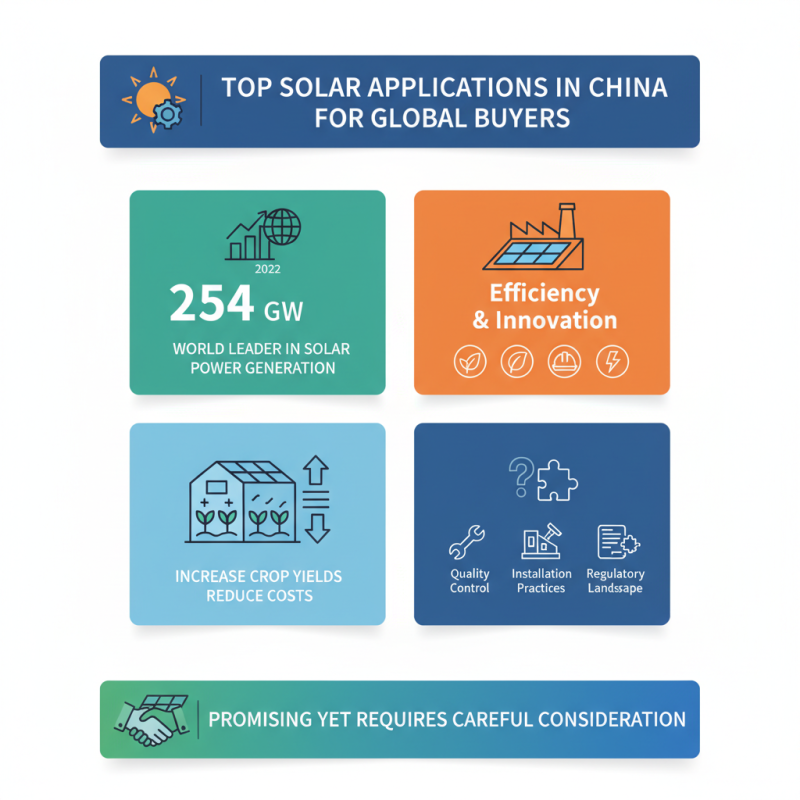
As China's solar market continues to expand, global buyers are keen to explore top Solar Applications. According to a report by the International Renewable Energy Agency (IRENA), solar energy capacity in China surged to 254 GW in 2022, making it the world leader in solar power generation. This growth presents substantial opportunities for businesses worldwide seeking reliable solar solutions.
“China's advancements in solar applications are unmatched,” notes Dr. Li Wei, an expert in renewable energy technology. “The nation has set a benchmark for efficiency and innovation.” Industries such as agriculture, construction, and electricity generation are increasingly integrating solar technologies. Solar panel systems in greenhouses increase crop yields while reducing costs.
However, challenges persist. Quality control and installation practices vary significantly. Buyers must navigate these complexities to ensure investment reliability. Additionally, the evolving regulatory landscape introduces uncertainties. The landscape of solar applications in China is promising yet requires careful consideration for international stakeholders.
Overview of Solar Energy Market in China and Its Global Impact
The solar energy market in China is a significant force on the global stage. In 2022, China accounted for over 40% of the world's total solar energy generation capacity, reaching approximately 392 gigawatts. This rapid growth highlights China's role as a leader in renewable energy, but challenges remain. The reliance on certain materials for solar panel production exposes vulnerabilities in the supply chain.
One area of concern is the environmental cost of solar panel manufacturing. While solar energy has many green benefits, the production process can result in substantial carbon emissions. The International Energy Agency (IEA) reported that manufacturing solar panels can release up to 50% more emissions than the actual energy they generate over their lifespan. This contradiction raises questions about the true sustainability of solar energy technologies.
Moreover, the increasing demand for solar products creates pressure on resources. Reports indicate that by 2030, the demand for rare materials needed in solar technologies could double. This upcoming strain necessitates innovative recycling methods and sustainable sourcing practices. While China excels in production capacity, addressing these complex issues will be key to maintaining its status and minimizing the environmental impact associated with solar energy.
Major Solar Application Sectors in China for Export and Investment
China has become a significant player in the global solar market. Several sectors within the country show promise for foreign investors. The solar energy industry is multifaceted, spanning manufacturing, installation, and technology development. These areas open numerous opportunities for collaboration and investment.
The solar manufacturing sector in China excels in producing photovoltaic panels and cells. This industry has advanced technology, which enhances efficiency while reducing costs. The rapid growth in installation services has also gained attention. Local firms are familiar with regional regulations and can navigate them effectively. However, understanding local market conditions can pose challenges.
Another notable sector is solar technology development. Research institutions and startups focus on solar innovations. These advancements can lead to competitive advantages. However, foreign investors might face hurdles in intellectual property rights. Engaging with local experts can help navigate these issues. The solar landscape in China remains dynamic, requiring ongoing adaptation and strategy refinement.
Technological Innovations Driving China's Solar Applications
China is at the forefront of solar technology innovation. This growth is driven by a blend of government support and industry investment. As the world's largest solar market, China is not just increasing its solar panel production. It's also developing advanced applications that enhance efficiency and sustainability.
Recent advancements include bifacial solar panels. These panels capture sunlight from both sides, improving energy output. Additionally, innovations like solar tracking systems optimize panel positioning. This maximizes energy absorption throughout the day.
There are challenges, however. The rapid technological changes necessitate continuous adaptation from manufacturers. Many small firms struggle to keep up, risking obsolescence. The need for ongoing research and development is crucial. China's solar market will remain dynamic, with new technologies emerging regularly. Global buyers must stay informed to leverage these advancements effectively.
Top Solar Applications in China for Global Buyers
| Application Type | Description | Market Size (USD Billion) | Growth Rate (%) |
| Residential Solar Systems | Solar panels installed in homes for electricity generation | 25.4 | 15 |
| Commercial Solar Solutions | Solar installations for businesses to reduce energy bills | 30.8 | 12 |
| Utility-Scale Solar Farms | Large solar energy plants supplying electricity to the grid | 50.2 | 10 |
| Solar Water Heaters | Systems that use solar energy to heat water for various purposes | 8.5 | 20 |
| Solar-Powered Transportation | Electric vehicles and other modes powered by solar energy | 15.3 | 25 |
Challenges and Opportunities for Global Buyers in Chinese Solar Products
China has emerged as a powerhouse in solar production. Global buyers are keen to tap into this booming market. However, navigating this landscape presents unique challenges and opportunities.
Quality assurance can be a significant hurdle. Many products may vary in quality, making it essential to establish rigorous assessment criteria. Buyers should conduct thorough due diligence. Engaging with third-party inspection services can mitigate risks. Make sure to request certifications and reference checks.
Another challenge is understanding compliance standards. Solar products must meet specific regulations in different countries. Buyers need to stay informed about these requirements. Participating in trade shows and industry seminars can provide valuable insights. Networking with local experts can also enhance understanding.
Tips:
When sourcing solar products, prioritize suppliers with a transparent production process. Always ask for a sample before committing to a large order. This ensures the product meets expectations.
Top Solar Applications in China for Global Buyers
This chart illustrates the top solar applications in China, highlighting both the opportunities and challenges faced by global buyers in the solar market.
Future Trends in China's Solar Industry and Their Global Implications
China's solar industry continues to evolve rapidly. In recent years, the country has emerged as the world's solar powerhouse. By the end of 2022, China accounted for over 50% of global solar capacity, which reached 1,100 gigawatts (GW). This rapid expansion is driven by technological advancements and government policy support. Yet, challenges remain. The industry faces issues such as supply chain constraints and fluctuating material costs, which can impact long-term sustainability.
Looking ahead, several trends will shape China's solar landscape. The integration of artificial intelligence in solar energy management is gaining momentum. Studies suggest that AI can increase efficiency by up to 20% in energy harvesting and distribution. Additionally, energy storage technologies are improving, providing solutions to intermittency challenges. However, these innovations require significant investment and infrastructure development, and not all firms are ready to adapt quickly.
Moreover, as China strengthens its solar supply chain, implications extend globally. Countries pursuing clean energy goals must reassess their dependencies. Reliance on Chinese technology might limit local innovation. A more diversified supply chain can foster resilience and creativity. Yet, balancing economic and environmental priorities poses a complex challenge for policymakers worldwide.