Skip to content

What Are Solar Power Providers?

Solar power providers help households, businesses, and communities access electricity generated from sunlight. Depending on the company and market, they may design systems, arrange financing, install panels, maintain equipment, or sell solar-generated electricity. A provider could be the firm that puts panels on a suburban roof, or a utility offering power from a distant solar farm. The label is broad. The contract matters.

The scale is no longer theoretical. IRENA’s Renewable Capacity Statistics 2025 reports that the world added 585 gigawatts of renewable power capacity in 2024, including about 452 gigawatts of solar. That rapid expansion makes provider choices more visible—and more consequential. IEA Executive Director Fatih Birol described the shift in the agency’s Renewables 2020 report: “Solar is the new king of electricity markets around the world.” But growth alone does not tell a customer whether a provider offers fair pricing, dependable service, or suitable equipment.

Those details deserve close attention. A rooftop quote should explain system size, expected output, warranties, and any financing terms in plain language. A power purchase agreement may work differently from a direct purchase, while community solar can serve people without suitable rooftops. Not every option fits every property. Comparing providers means checking what they actually deliver, not just the panel brand or advertised savings. This guide explains the main provider types, their services, and the practical questions to ask before choosing one. A useful caution: estimates are still estimates; shade, weather, and household use can change real-world results.
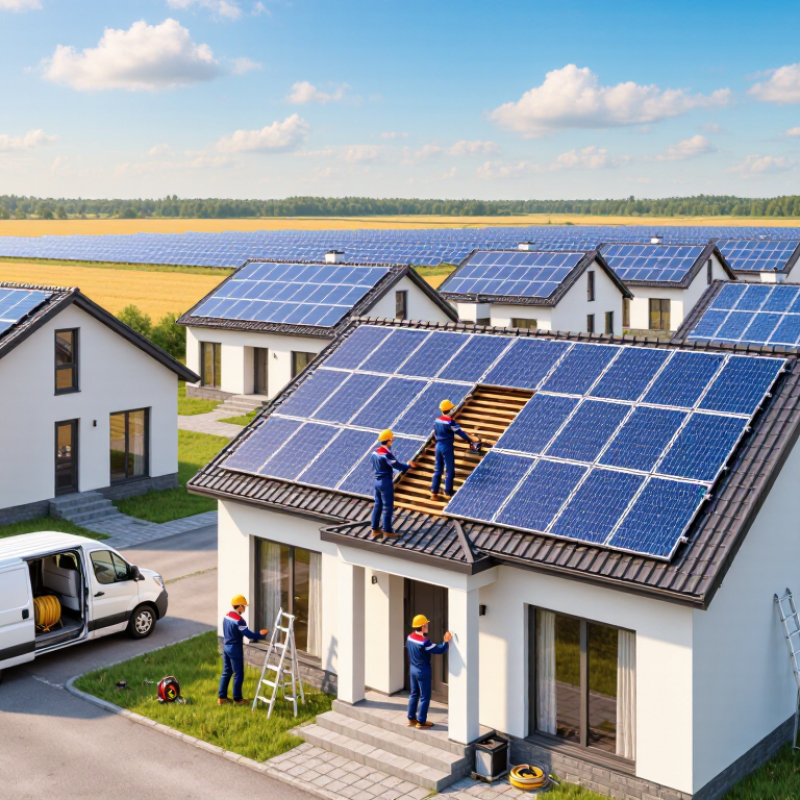
What Are Solar Power Providers?

Definition and Role of Solar Power Providers

A solar power provider is a company or organization that helps customers access electricity generated by sunlight. Its role may include assessing a property, designing a system, arranging panels and inverters, and coordinating installation. Some providers also offer monitoring, repairs, financing, or a long-term electricity agreement. The exact package varies, so the label alone tells you little.

A careful provider checks roof direction, shade, structural condition, and household energy use before recommending equipment. A chimney, for example, may shade two panels after 3 p.m. and reduce their output. The process is not always tidy. Providers can estimate annual production, but weather, equipment aging, and household habits affect actual results. Ask what assumptions support an estimate, who handles service calls, and whether warranties cover labor as well as parts.

Providers may also explain grid connections and whether battery storage suits a home. A battery can store midday electricity for evening use, but it adds cost and may not fit every household. One proposal might include maintenance; another may leave the owner to arrange it. Compare the written details closely. Even a clear proposal can overlook practical issues, such as access to a steep roof. A second look can reveal useful questions before installation begins.

How Solar Power Providers Generate and Deliver Electricity

What Are Solar Power Providers?

How Solar Power Providers Generate and Deliver Electricity

Solar power providers turn sunlight into usable electricity through rooftop arrays, shared solar fields, or large power plants. Photovoltaic cells produce direct current when light reaches their semiconductor layers. Inverters convert that current into alternating current, the form used by most buildings and the electric grid. On a clear afternoon, a meter may show output climbing as sunlight strengthens, though high panel temperatures can slightly reduce efficiency.

What happens next depends on the provider’s role. Some operate solar installations and sell their electricity through service plans. Others arrange power from solar projects and coordinate its delivery through the local grid. Transformers raise voltage for transmission, while substations and neighborhood lines route electricity toward homes and businesses. The electrons are not usually traceable to one rooftop. The grid blends sources.

When solar production exceeds demand, surplus electricity may flow onto the grid or charge batteries, if storage is installed. After sunset or during heavy cloud, providers may draw on stored energy or other grid generation. That handoff is less simple than a sales page can make it sound. Output varies with season, shading, equipment condition, and grid capacity. Customers can check how their service measures electricity use, exports, and backup power.

Main Types of Solar Power Providers

Solar power providers take different roles in getting electricity from sunlight to a home or business. Full-service solar installers assess the roof, estimate system size, source equipment, and coordinate installation. A site visit may include checking roof shade, electrical capacity, and the location of the inverter. Some companies also arrange financing, while others focus on installation only.

Equipment suppliers sell components such as panels, inverters, and batteries, usually through installers or directly to customers. They may offer product support, but they do not necessarily design the whole system or handle repairs.

Solar leasing and power-purchase providers own the equipment on a customer’s property; customers pay a regular fee or pay for the electricity produced, under contract terms that vary. Read those terms carefully.

Community solar providers operate a shared solar project, often allowing subscribers to receive bill credits without installing panels at home. Availability and credit rules depend on the local program. Utilities may also provide solar services or connect customers with approved programs, but their role differs by area. Some providers combine several of these roles, so the categories can blur. That can be confusing.

Before signing, check who owns the system, who monitors its output, and who responds if equipment fails. A clear repair contact matters.

Services and Agreements Offered to Customers

What Are Solar Power Providers?
Services and Agreements Offered to Customers

Solar power providers help customers plan, install, and maintain rooftop or ground-mounted systems. Services may include a roof inspection, shade assessment, equipment selection, installation, and help connecting the system to the local utility. Some providers also monitor system output and arrange repairs. Ask who handles service calls after installation. Details matter.

Agreements can work quite differently. With a cash purchase or loan, the customer typically owns the equipment and may be responsible for upkeep. A lease lets a customer pay to use a system owned by the provider. Under a power purchase agreement, the customer pays for the electricity produced, often at a stated rate. Terms, fees, and responsibilities vary, so compare written offers rather than relying on a quick sales estimate.

Read how the agreement treats repairs, equipment warranties, electricity rates, and system performance. Check what happens if you sell your home or end the contract early. Ask whether quoted savings include fixed utility charges; those charges may remain even when panels produce power. A tidy estimate can still miss roof repairs, seasonal shade, or changing household use. That is worth questioning before signing.

What Are Solar Power Providers? - Services and Agreements Offered to Customers

Category What the Provider May Offer Common Agreement or Payment Arrangement What Customers Should Check
Assessment and system design Reviews electricity use, roof or site conditions, shading, and possible system size; provides an estimated production design. Usually included in a purchase, lease, or power purchase agreement proposal; a site visit may be required before final design. Confirm assumptions about energy use, shading, roof condition, system output, and any production estimates or disclaimers.
Equipment and installation May supply and install solar panels, inverters, mounting equipment, and related electrical components. The contract generally identifies equipment, project price or payment method, installation scope, and estimated schedule. Check equipment specifications, installation exclusions, workmanship coverage, change-order rules, and who arranges permits and inspections.
System purchase Installs a system that the customer buys, either with available funds or through separate financing. Payment may be made upfront or through a loan. Loan terms, interest, fees, and lender requirements depend on the financing offer. Compare the total price and financing cost. Review who owns the equipment and who is responsible for maintenance and repairs.
Solar lease A provider or system owner installs equipment and grants the customer use of the system for a contracted period. The customer typically pays a recurring lease charge. Contract length, payment schedule, and any escalator vary by offer. Review payment increases, service coverage, end-of-term options, transfer requirements, and any costs to remove or relocate equipment.
Power purchase agreement (PPA) A provider-owned system generates electricity for use at the property, subject to the agreement and applicable utility rules. The customer pays for measured solar electricity under a stated price-per-energy-unit structure; rates and terms differ by contract. Check the rate, any rate increase, billing method, treatment of unused production, utility charges, and options if the property is sold.
Battery storage and backup May design and install a battery to store electricity or provide backup power for selected loads, depending on system configuration. May be purchased, financed, leased, or included in a broader service agreement, where offered. Confirm usable capacity, backed-up circuits, operating settings, warranty conditions, and whether the system works during a grid outage.
Permits, inspections, and utility connection May prepare permit applications, coordinate inspections, and submit interconnection materials to the utility. Responsibilities and fees should be stated in the project scope; utility approval and permission to operate are separate from installation completion. Ask who pays application or inspection fees, who handles delays, and when the system may legally begin operating.
Monitoring and maintenance Some offers include online production monitoring, troubleshooting, maintenance, or repair coordination. Coverage depends on the purchase warranty or service terms in a lease or PPA. Not every contract includes the same services. Check response times, covered parts and labor, exclusions, monitoring access, and the process for reporting reduced output.
Warranties and performance terms Equipment manufacturers may provide product warranties; installers or system owners may offer separate workmanship or service coverage. Warranty periods, remedies, and any production guarantees are specific to the written documents and equipment. Identify the responsible party, claim procedure, exclusions, transferability, and remedy if a stated performance threshold is not met.
Ownership, property sale, and contract end The provider may explain transfer, buyout, renewal, removal, or other end-of-term procedures where the contract allows them. Options differ among purchases, loans, leases, and PPAs; transferring an agreement may require approval or buyer qualification. Read sale, refinancing, default, early termination, roof work, and end-of-term clauses before signing.

Terms, services, utility arrangements, and available incentives vary by location and contract. Review the complete written proposal and agreement before making a decision.

How to Compare and Choose a Solar Power Provider

A solar power provider can design, install, finance, or maintain a home solar system. Some providers handle every step; others arrange installation through contractors. Compare the actual services in each offer, not just the monthly payment. Ask for a written equipment list, estimated annual production, and a clear explanation of who handles repairs.

Look closely at how each estimate accounts for your roof’s direction, shade, and condition. A tree’s afternoon shadow can reduce production, while an aging roof may need work before panels go up. Compare warranty coverage for equipment, installation, and energy output. Check whether the production estimate states its assumptions, such as local sunlight and expected system losses. Request an itemized quote and ask about payment schedules, monitoring, and service response times. A polished proposal is useful, but it is not proof of a careful site assessment. I might still find the numbers hard to compare; ask each provider to explain them using the same assumptions.

Tips: Save each quote and compare it line by line. Ask who you contact if the system stops producing. Get unclear promises in writing.

What Are Solar Power Providers? How to Compare and Choose One

Compare the equipment each provider offers—not just the price. Panel efficiency indicates how much sunlight a panel converts into electricity; actual system output also depends on factors such as roof orientation, shading, and local sunlight.

Typical ranges are approximate and vary by product. Ask providers for the specific panel model, system design, warranties, and estimated production for your home. Source: EnergySage, Solar Panel Efficiency.