Top Solar Battery Storage Systems for Homes and Businesses?
A home battery can change how a solar array performs after sunset. It stores excess daytime generation for evening use, backup power, or carefully timed energy consumption. But capacity, inverter compatibility, usable output, and warranty terms vary widely. The best solar battery storage system is not automatically the largest or cheapest; it must match the property’s load, solar production, and backup priorities.
The International Energy Agency’s Batteries and Secure Energy Transitions report found that global battery storage additions in the power sector reached about 42 gigawatts in 2023, more than doubling from the previous year. That growth signals rapid technological progress, but it does not guarantee every household will save money. Tariffs, installation costs, weather, and local grid rules can change the result. Check the assumptions.
For businesses, the stakes can include peak-demand charges, production continuity, and the cost of brief outages. A cold-storage site, for example, may value reliable backup differently from an office that can pause nonessential equipment. Buyers should compare usable capacity, continuous power, round-trip efficiency, operating temperature, monitoring tools, and service support—not just headline kilowatt-hours. Independent specifications and installer references help separate tested performance from marketing claims. Still, published figures rarely capture every real-world constraint, and that deserves honest attention. This guide compares leading residential and commercial options, explains the trade-offs, and identifies questions to ask before requesting a quote.
What Solar Battery Storage Systems Are and How They Work
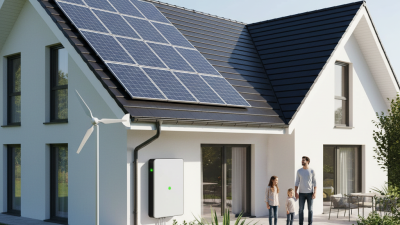
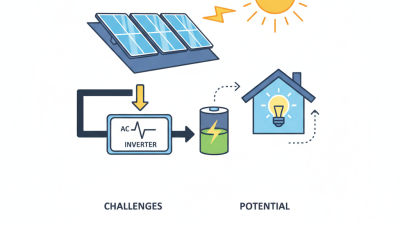
A solar battery storage system captures surplus electricity from rooftop panels and saves it for later. During sunny hours, a hybrid inverter directs power to household appliances, charges the battery, or sends excess electricity to the grid. After sunset or during an outage, the inverter converts stored direct current into usable alternating current. The battery’s usable capacity, power rating, and control settings determine what it can run—and for how long. A small battery may cover lights and a refrigerator, but not an electric oven and heating system at once. The International Energy Agency reported that global battery storage additions in the power sector reached about 42 GW in 2023, nearly twice the previous year’s level. That figure reflects grid-scale growth, not home installations, but it shows how quickly storage technology is expanding.
Tips: Compare usable capacity with your evening demand, not just the battery’s advertised size. Check whether the system can provide backup power; some require extra equipment or a separate circuit. Ask how it behaves during cloudy weather. It may not match your expectations.
For homes and businesses, solar batteries can shift solar energy into evening use and provide backup when configured for it. A battery management system monitors temperature, voltage, and charge levels to help protect performance. Installation design matters: an undersized inverter can limit how many devices run together, while a larger battery may sit partly unused. The U.S. National Renewable Energy Laboratory’s PVWatts tool estimates solar production using location and weather data, which can help assess potential charging—but real results vary with shade, roof angle, and seasonal conditions. Even careful estimates miss some details. That is worth checking before choosing a system.
Key Technologies Used in Home and Business Solar Batteries
Top Solar Battery Storage Systems for Homes and Businesses?
Key Technologies Used in Home and Business Solar Batteries
Lithium iron phosphate batteries now suit many homes and businesses. They offer strong thermal stability and long cycle life. Nickel-manganese-cobalt cells provide higher energy density, but require stricter thermal controls. BloombergNEF’s 2024 Battery Price Survey reported an average lithium-ion pack price of 115 dollars per kilowatt-hour. Lower prices improve project economics, although installation costs remain significant. No chemistry is perfect.
Battery management systems monitor voltage, temperature, and state of charge. They can isolate unsafe cells and balance charging levels. Thermal management becomes essential in hot plant rooms or poorly ventilated garages. NREL’s Storage Futures Study models lithium-ion round-trip efficiency near 85% to 95%. Actual results depend on wiring, inverters, weather, and maintenance. That detail is often underestimated.
Tips: Match battery capacity with daily loads, not only panel size. AC-coupled systems simplify retrofits, while DC-coupled systems can reduce conversion losses. An energy management system can shift charging toward midday solar and discharge during evening demand. Businesses should examine demand charges, backup priorities, and warranty conditions. IEA reports that global battery storage deployment must expand rapidly this decade to support renewable integration. Forecasting remains imperfect, especially during cloudy weeks. Leave room for monitoring and future expansion.
How to Compare Battery Capacity, Efficiency, and Lifespan
Top Solar Battery Storage Systems for Homes and Businesses?
Battery capacity tells you how much energy a system can store, but the usable figure matters more. A battery advertised at 10 kilowatt-hours may reserve some energy to protect its cells. Check the usable capacity, then compare it with your evening demand or business load. A home running lights, a refrigerator, and a small heater needs a different setup from a workshop operating tools. Check power output, too. A large energy reserve cannot run equipment that exceeds the battery’s output limit.
Efficiency shows how much stored energy you can actually use after charging losses. If a system has 90 percent round-trip efficiency, roughly 10 percent of the charging energy is lost in the process. Compare figures measured under similar conditions; test methods can vary. That matters. Lifespan is also more than a cycle count. Review the warranty’s years, cycle limit, and remaining-capacity guarantee, and ask how heat affects performance. High temperatures can accelerate battery wear. A cycle rating may look reassuring, yet daily use and installation conditions shape real service life. It is easy to focus on the biggest capacity number and miss the practical trade-off: extra storage costs money, and unused energy still has a price.
Top Solar Battery Storage Systems for Homes and Businesses? — How to Compare Battery Capacity, Efficiency, and Lifespan
| Battery System Type |
Typical Application |
Typical Nominal Capacity |
Typical Usable Capacity |
Round-Trip Efficiency |
Typical Cycle Life |
Typical Service Life |
Key Consideration |
| Lithium iron phosphate (LFP), residential |
Homes seeking daily solar self-consumption, backup power, or time-of-use shifting |
5–20 kWh per system; expandable in some designs |
About 80–100% of nominal capacity, depending on operating limits |
About 85–95% |
About 3,000–8,000 cycles |
Often around 10–15 years |
Generally offers long cycle life and strong thermal stability; check the system’s usable capacity and warranty terms. |
| Lithium nickel manganese cobalt oxide (NMC), residential |
Homes where compact size and high energy density are priorities |
5–15 kWh per system; expandable in some designs |
About 80–95% of nominal capacity, depending on operating limits |
About 85–95% |
About 2,000–5,000 cycles |
Often around 8–15 years |
High energy density can reduce installation space, but lifespan and usable capacity vary with temperature, charge rate, and depth of discharge. |
| LFP, commercial and light industrial |
Businesses managing demand charges, solar shifting, or critical-load backup |
About 50 kWh to several MWh, configured from multiple units |
Commonly about 80–100% of nominal capacity, subject to system settings |
About 85–95% |
About 3,000–8,000 cycles |
Often around 10–15 years |
Compare the complete system’s power rating in kW as well as energy capacity in kWh; either can limit performance. |
| Lead-acid, deep-cycle |
Smaller off-grid systems, backup applications, or installations with tight upfront budgets |
Commonly about 5–20 kWh per installation |
Often about 40–80% of nominal capacity to manage battery life |
About 70–85% |
About 500–1,500 cycles |
Often around 3–10 years |
Lower usable capacity and shorter cycle life can increase the amount of storage needed for repeated daily cycling. |
| Vanadium redox flow |
Large commercial, industrial, or long-duration stationary storage projects |
Typically hundreds of kWh to multiple MWh |
Often designed for a broad operating range; project configuration determines usable capacity |
About 65–85% |
About 5,000–20,000 cycles |
Potentially around 15–25 years, depending on maintenance and component replacement |
Can suit frequent cycling and long-duration applications, but usually requires more space and project-specific installation. |
Comparison note: Figures are indicative technology-level ranges, not guarantees for a specific product. Actual performance depends on system design, temperature, charge and discharge rate, depth of discharge, controls, and maintenance. Cycle-life figures are generally measured to a stated remaining-capacity threshold under specified test conditions. Compare warranted usable energy, continuous power, warranty duration, and expected daily operating profile before selecting a system.
The Best Solar Battery Features for Homes and Businesses
Top Solar Battery Storage Systems for Homes and Businesses?
The best solar battery features begin with usable capacity, not impressive headline numbers. A household may need evening power for lights, refrigeration, and internet equipment. A business may require several hours of backup for servers, security systems, or payment terminals. During site assessments, I compare daily energy use with expected solar production. This prevents buyers from paying for unused storage. Capacity should also leave room for seasonal changes.
Round-trip efficiency matters because every conversion loses energy. A reliable battery should include thermal monitoring, overcurrent protection, and strong enclosure design. These features help protect the system in hot garages, dusty utility rooms, and cold outdoor spaces. Independent safety testing and qualified installation deserve serious attention. They are not decorative paperwork. They reduce avoidable risks.
For homes and businesses, flexible control is equally important. A useful system can prioritize self-consumption, backup power, or time-based energy use. Clear monitoring should show charge levels, power flow, and fault alerts without confusing menus. Remote updates can help, but local access remains valuable when internet service fails. Scalable storage may suit growing businesses, although expansion is not always simple. The inverter, wiring, and protection equipment must support future capacity. No system is perfect. I have seen customers focus on battery size while overlooking installation space and maintenance access. That mistake can make an expensive system frustrating to operate.