Top 10 Solar Energy Solutions Tips for Homeowners to Save Money
As homeowners increasingly seek ways to reduce energy costs and embrace sustainable living, solar energy solutions have emerged as a compelling choice. By harnessing the power of the sun, these solutions not only contribute to a greener planet but also provide significant savings on monthly utility bills. This article presents ten practical tips specifically designed for homeowners looking to maximize their investment in solar energy systems.
By implementing these solar energy solutions, homeowners can not only enhance the efficiency of their systems but also take advantage of various incentives and rebates available for renewable energy adoption. From selecting the right solar technology to understanding the best practices for maintenance and energy consumption, these tips aim to empower homeowners with the knowledge they need to make informed decisions. Ultimately, investing in solar energy solutions not only benefits individual households but also plays a crucial role in the larger movement toward sustainable energy consumption.
Understanding Solar Energy: A Homeowner's Introduction
Solar energy has emerged as a significant solution for homeowners looking to reduce energy costs and minimize their carbon footprint. Understanding the fundamentals of solar power is crucial for anyone considering this renewable energy source. Solar energy harnesses sunlight using photovoltaic cells, transforming it into electricity. This technology not only supports sustainable living but also offers substantial long-term savings on utility bills. Homeowners can benefit from various incentives, rebates, and tax credits designed to make solar installations more affordable, ultimately encouraging a transition to cleaner energy sources.
As homeowners explore solar energy solutions, assessing their specific energy needs and property characteristics is essential. Factors such as roof orientation, shading, and local climate can influence the efficiency of solar panels. Conducting a thorough analysis will help in determining the right system size and type that suits individual circumstances. In addition, understanding grid connectivity options, such as net metering, allows homeowners to optimize their solar energy usage and further enhance savings. By gaining a deeper comprehension of solar energy, homeowners can make informed decisions, leading to a fruitful investment in their energy future.
Top 10 Solar Energy Solutions Tips for Homeowners to Save Money
| Tip No. |
Tip Description |
Estimated Savings (%) |
Initial Investment ($) |
Payback Period (years) |
| 1 |
Install Solar Panels |
20-30% |
15,000 |
5-7 |
| 2 |
Use Solar Water Heaters |
10-15% |
3,500 |
3-5 |
| 3 |
Install Solar Garden Lights |
5-10% |
500 |
1-2 |
| 4 |
Upgrade to Energy-Efficient Appliances |
15-20% |
8,000 |
4-6 |
| 5 |
Insulate Your Home |
10-15% |
2,000 |
2-4 |
| 6 |
Use Smart Thermostats |
5-12% |
200 |
1-3 |
| 7 |
Solar Battery Storage |
10-25% |
7,000 |
6-8 |
| 8 |
Solar Pool Heating Systems |
15-20% |
4,000 |
3-5 |
| 9 |
Install Reflective Roof Coatings |
10-15% |
2,500 |
2-3 |
| 10 |
Utilize Energy Audits |
5-10% |
300 |
1-2 |
Evaluating Your Home's Suitability for Solar Energy Systems
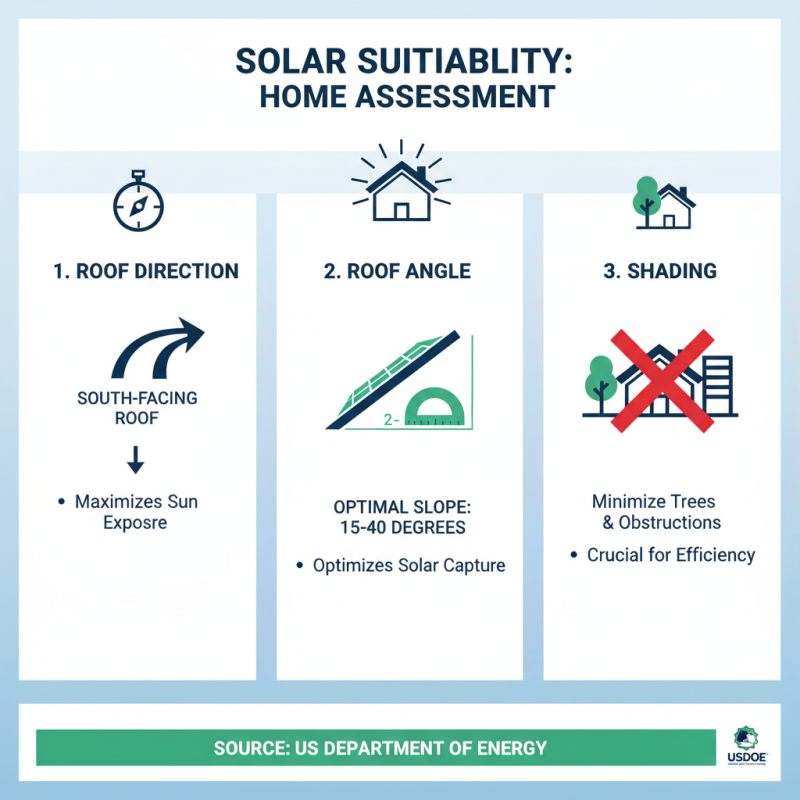
When considering solar energy systems for your home, the first step is to evaluate your property’s suitability for solar installation. According to the U.S. Department of Energy, homes with a south-facing roof that receives adequate sunlight for a significant portion of the day are generally the most favorable for solar panel installations. Specifically, a roof slope of 15 to 40 degrees can optimize solar exposure. Additionally, shading from trees or nearby buildings can significantly reduce the efficiency of solar panels; therefore, it’s crucial to assess potential obstructions throughout the day.
Moreover, local climate conditions play a vital role in the effectiveness of solar energy systems. The National Renewable Energy Laboratory (NREL) highlights that solar panels can generate electricity even under cloudy conditions, but the optimal energy generation occurs in regions with high solar insolation. Homeowners should review monthly solar radiation data for their area, which can be found in resources like the Solar Energy Industries Association's database. These insights not only help in determining the number of panels required but also aid in estimating potential savings on energy bills.
Lastly, understanding local regulations and incentives can influence your decision. Many states offer tax credits and rebates for solar installations, which can significantly offset upfront costs. By conducting a thorough evaluation of your home's suitability for solar energy systems, including structural integrity, sunlight exposure, and local incentives, homeowners can make informed decisions that enhance both energy efficiency and financial savings.
Selecting the Right Solar Panels for Maximum Efficiency
When selecting the right solar panels for maximum efficiency, one must first consider the type of solar technology that best suits their home.
Monocrystalline panels, known for their high efficiency and sleek design, can be an excellent option for homeowners with limited roof space.
On the other hand, polycrystalline panels, while generally less efficient, are often more budget-friendly and can be suitable for those with larger installation areas.
Understanding the differences between these types can significantly influence overall energy production and cost-effectiveness.
Another critical factor is the panel's efficiency rating, which indicates how much sunlight can be converted into usable electricity.
Look for panels with a higher efficiency rating to maximize energy output, particularly if the installation is on a less-than-ideal location with potential shading issues.
Additionally, pay attention to the warranty and performance guarantee provided by manufacturers, as these can provide reassurance about the longevity and reliability of the investment.
By focusing on these key aspects, homeowners can make informed choices that align with their energy needs and financial goals.
Exploring Financial Incentives and Rebates for Solar Installation
When considering solar energy solutions, homeowners can significantly benefit from various financial incentives and rebates available to them. Many government programs offer tax credits to encourage solar installations, allowing homeowners to deduct a percentage of the installation costs from their federal taxes. These credits can lead to substantial savings and make the transition to solar power more accessible.
In addition to federal tax credits, many states provide their own set of rebates and incentives. Some states offer cash-back programs for the installation of solar panels, while others may provide benefits such as net metering, allowing homeowners to receive credits for excess electricity generated by their solar systems. Local utility companies may also have specific programs aimed at encouraging renewable energy adoption, which can further enhance the financial feasibility of installing solar panels. By taking advantage of these incentives, homeowners can reduce their upfront costs and achieve a quicker return on their investment in solar energy solutions.
Maintaining Your Solar Energy System for Long-Term Savings
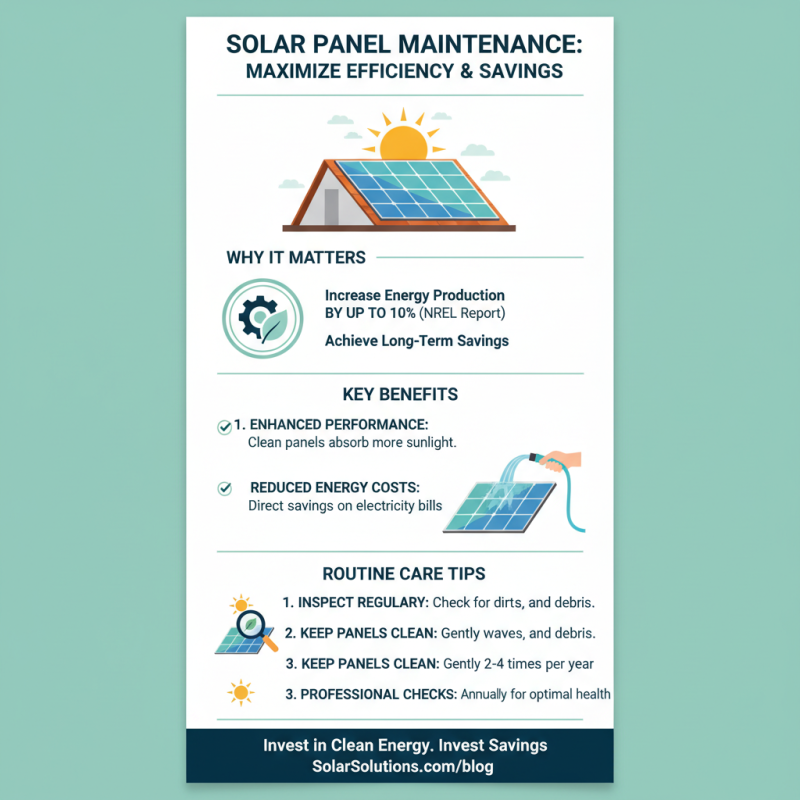
Regular maintenance of your solar energy system is crucial for maximizing efficiency and achieving long-term savings. According to a report from the National Renewable Energy Laboratory (NREL), properly maintaining a solar photovoltaic (PV) system can increase its energy production by up to 10%. Homeowners should perform routine inspections to identify any debris on solar panels, such as leaves or dirt, which could obstruct sunlight. Keeping panels clean and well-maintained can significantly enhance their performance, contributing directly to reduced energy costs.
Additionally, it's essential to monitor the performance of your solar energy system continuously. Many modern systems come equipped with monitoring tools that provide real-time data on energy production and consumption. A study by the Solar Energy Industries Association (SEIA) indicates that homeowners who actively monitor their systems can achieve up to 15% more energy savings over time compared to those who do not. Addressing minor issues promptly, such as replacing worn-out components or fixing wiring problems, can prevent more significant damage, leading to lower repair costs and longer system lifespan. Investing time and resources into regular maintenance not only protects your investment but also ensures that your solar energy system operates at peak efficiency.