Top 5 Solar Energy Solutions You Should Consider for Your Home?
As homeowners increasingly seek sustainable energy options, solar energy solutions have emerged as a top choice. According to the U.S. Energy Information Administration, solar energy accounted for 42% of new electricity generating capacity in the U.S. in 2022. This shift towards renewable sources is a pivotal moment in the fight against climate change. Industry expert Dr. Emily Carter emphasizes, "Solar energy solutions offer not only environmental benefits but also significant cost savings for households."
However, despite the promising advantages, challenges remain. Many homeowners feel overwhelmed by the variety of available solar energy solutions. Understanding the differences between solar panels, solar tiles, and solar batteries can be daunting. Reports show that around 80% of homeowners are unsure about which option suits their needs best. Consequently, making well-informed decisions is critical for maximizing the benefits of solar energy solutions.
Exploring these challenges leads us to a closer look at the top five solar energy solutions. These solutions can transform homes into energy-efficient havens. Nevertheless, a lack of information can hinder progress. It's essential to remain open to learning and reassessing what works.
Types of Solar Panels: Comparing Monocrystalline, Polycrystalline, and Thin-Film
When considering solar energy for your home, the type of solar panels is crucial. Monocrystalline panels are known for their high efficiency and sleek design. They are made from a single crystal structure which makes them the most efficient choice. However, they can be pricey and may not be affordable for everyone. Some homeowners may feel the upfront cost outweighs the benefits.
Polycrystalline panels, in contrast, are often cheaper. They are made from multiple crystal structures and are slightly less efficient. Still, they perform well in various lighting conditions. Many homeowners appreciate their cost-effective nature but should note that these panels take up more space due to their lower efficiency.
Thin-film solar panels are the lightest option. They are flexible and can be installed in various locations. However, they generally have lower efficiency compared to the other types. Homeowners may find that they require more space and may not generate as much power.
Tips for choosing the right panel include evaluating your roof space and energy needs. Take into account the local climate too. It's worth reflecting on whether investing in higher efficiency panels is a necessity for your situation. Sometimes, opting for a more budget-friendly option can still meet your energy demands effectively.
Comparison of Solar Panel Types
Benefits of Solar Energy Systems for Residential Use
Solar energy systems offer numerous benefits for residential use. One major advantage is significant cost savings on electricity bills. Homeowners often notice a drop in monthly expenses after installation. Additionally, solar energy can increase the value of your home. Many buyers today prioritize energy efficiency. They might pay more for a home with solar panels already installed.
Using solar energy means you reduce your carbon footprint. This decision supports a cleaner environment for future generations. It's a great way to combat climate change. Some people find it empowering to generate their own electricity. It's a step toward energy independence.
When considering solar options, think about your home's orientation to the sun. Not all rooftops are ideal for solar panels. South-facing roofs often provide the best exposure. Also, check local zoning laws and incentives. These can vary greatly depending on your area. A community solar program might be a viable alternative if installation isn't feasible. Make sure to weigh these factors before making any commitments.
Top 5 Solar Energy Solutions You Should Consider for Your Home
| Solar Solution |
Type |
Installation Cost (USD) |
Average Energy Savings (per year) |
Payback Period (Years) |
| Photovoltaic Panels |
Grid-tied |
$15,000 |
$1,200 |
12.5 |
| Solar Water Heating |
Active |
$4,500 |
$300 |
15 |
| Solar Battery Storage |
Storage |
$7,000 |
$800 |
8.75 |
| Solar Roof Tiles |
Building-integrated |
$21,000 |
$1,700 |
12.35 |
| Solar Pool Heating |
Active |
$3,000 |
$500 |
6 |
How to Choose the Right Solar Inverter for Your Home
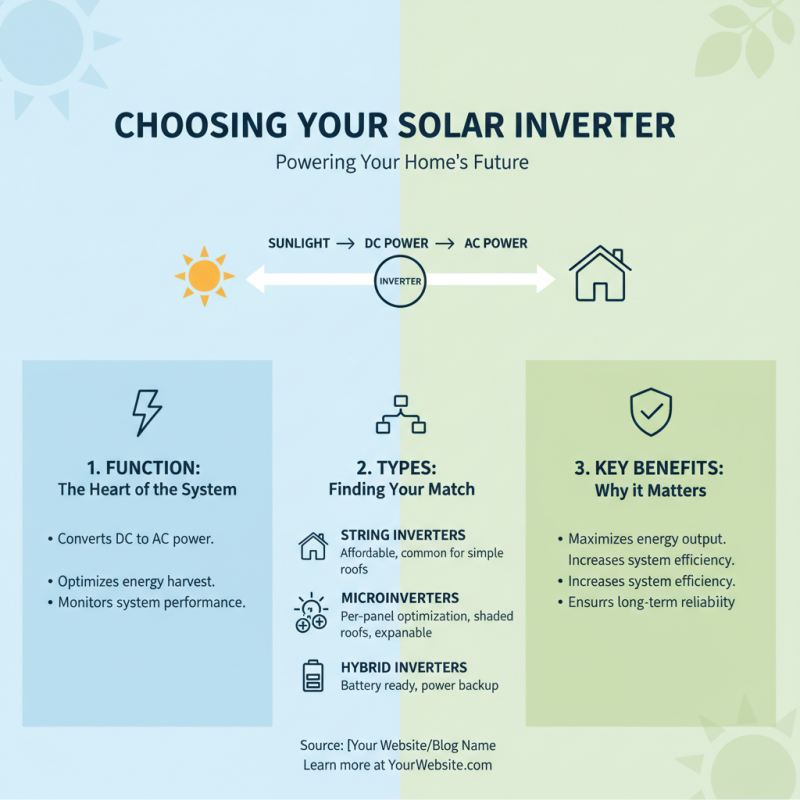
Choosing the right solar inverter for your home is crucial. The inverter converts sunlight into usable energy. Without the proper inverter, your solar system won't perform well. Different types of inverters exist, each with unique benefits. Understanding these options can be overwhelming.
Consider the three main types: string inverters, microinverters, and power optimizers. String inverters are popular and cost-effective. They connect multiple panels and are simple to install. However, they lack flexibility. If one panel underperforms, the whole system's efficiency drops. Microinverters offer better performance. Each panel has its own inverter. This setup maximizes energy production. But, it might come with higher upfront costs.
Power optimizers bridge the gap between string inverters and microinverters. They help improve efficiency and lower losses. However, they still rely on a central inverter. Choosing wisely involves assessing your specific needs. Is your roof shaded? Do you have space for multiple inverters? Reflecting on these factors is essential for making an informed choice.
Understanding Solar Battery Storage Options for Enhanced Energy Efficiency
Solar battery storage is a critical component in enhancing energy efficiency for homes. These systems allow you to store excess energy generated during the day for use at night. Imagine harnessing sunlight when it's abundant and using it when the sun sets. It makes sense to have energy ready on demand. However, choosing the right battery can be confusing.
One often overlooked aspect is the battery's lifespan. Some may last longer than others, but they usually come with varying warranties. Expecting them to meet your energy needs without careful planning can lead to disappointment. Additionally, the upfront costs can be significant. It's essential to assess your energy consumption and storage requirements realistically.
Another factor is the battery type. Lithium-ion batteries are popular, but lead-acid options exist. Each has its pros and cons. Think about where you will install the battery. Will it be in a garage or a dedicated space? Location matters for both performance and accessibility. Analyze your options thoroughly before making decisions.
Government Incentives and Rebates for Installing Solar Energy Solutions
Government incentives and rebates can significantly reduce the cost of installing solar energy solutions at home. Many homeowners are unaware of the financial assistance available. Local, state, and federal programs often provide tax credits and rebates. These can cover a substantial portion of the installation costs. By taking advantage of these incentives, homeowners can achieve quicker returns on their investments.
Tips: Research local programs in your area. Some regions offer additional incentives for using specific technologies or installation methods. It’s worth your time to look into these options. You might discover financial support that aligns with your solar plans.
Consider your energy consumption. This will help you choose the right solar solution for your home. If your energy needs are high and your roof space is limited, selecting the most efficient panels becomes critical. Yet, mistakes can happen here. Many homeowners overlook assessing shading from trees or nearby buildings. This could lead to poor energy generation later on. Address these concerns early to maximize your benefits.
Remember, not everyone qualifies for every incentive. Eligibility depends on location and circumstances. Be open to the possibility that your plans might need adjustments. This flexibility can lead to better long-term savings and a more effective solar energy solution at home.