2026 Top Solar Maintenance Tips You Need to Know?
In the world of renewable energy, effective solar maintenance is crucial. According to Dr. Emily Hart, a leading expert in solar technology, “Regular maintenance can significantly extend the lifespan of solar panels.” This statement emphasizes the importance of caring for solar systems to maximize their efficiency and productivity.
Many homeowners overlook basic solar maintenance tasks. Cleaning panels, checking for debris, and inspecting connections are vital steps. Neglecting these can lead to reduced energy output. Small issues can escalate into costly repairs over time. It's essential to develop a reliable maintenance routine to prevent such scenarios.
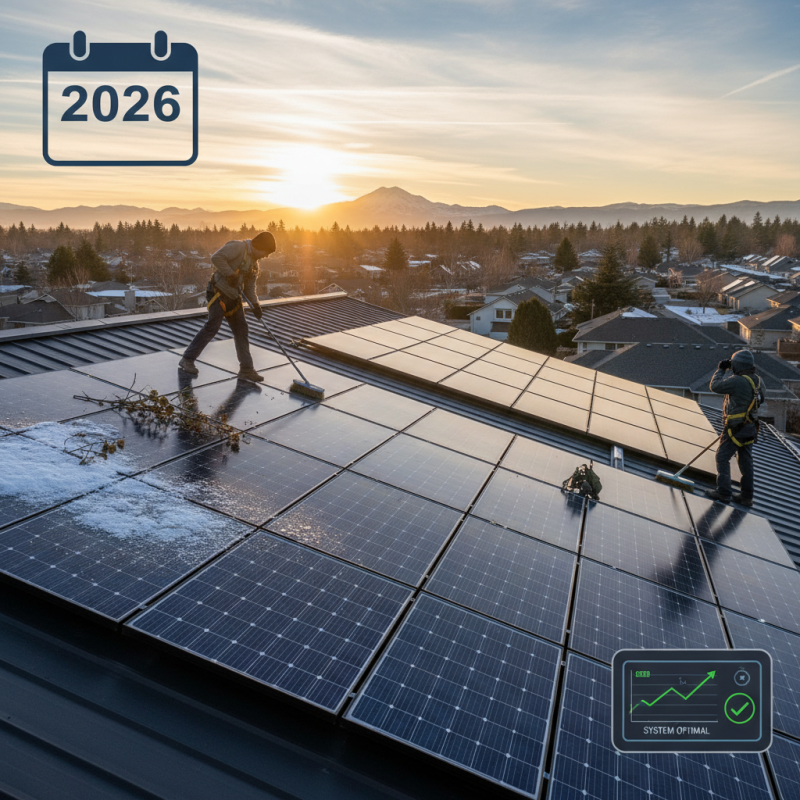
Moreover, understanding local weather impacts is key. Harsh conditions can affect performance. For instance, heavy snowfall might cover panels, blocking sunlight. Regular inspections will help in identifying these challenges early. Embracing proactive solar maintenance will ensure that your solar investment continues to pay off effectively.
Top Solar Maintenance Tips for Longevity and Efficiency
To maintain solar panels for longevity and efficiency, regular inspections are key. A report by the National Renewable Energy Laboratory shows that proper maintenance can increase performance by up to 30%. This increase leads to improved energy output over time. Dirty panels result in reduced efficiency. Dust, debris, and bird droppings can block sunlight. Cleaning them at least twice a year can make a significant difference.
Additionally, monitoring the inverter is crucial. It's the heart of the solar system. If it malfunctions, energy production drops. Keeping an eye on performance metrics can help identify issues early. Regular checks can prevent costly repairs later. A study noted that routine maintenance could extend the lifespan of solar systems by more than 10 years.
Weather can also take a toll on solar panels. Hail, heavy snow, or strong winds may damage them. After severe weather, it's wise to inspect the panels for cracks or loose components. Your investment deserves attention. Most homeowners overlook this step, potentially leading to larger issues down the line. Proper care requires diligence and reflection on one's maintenance habits.
Understanding the Importance of Regular Inspections and Cleaning
Regular inspections of solar panels are essential for optimal performance. Dust, debris, and leaves can accumulate on the surface, blocking sunlight. This can lead to a significant drop in energy output. A simple cleaning routine can help maintain efficiency. Schedule inspections at least twice a year to assess panel condition.
During these inspections, check for any physical damage. Cracks or loose connections can affect overall functionality. It’s not just about cleaning; it’s about understanding how each component works. Identifying minor issues early can prevent costly repairs later. Neglecting these inspections can lead to unexpected failures and reduced energy production.
Cleaning isn’t always straightforward. Weather conditions and local environment play a role. Sometimes, it’s easy to overlook the need for maintenance. Just because the system seems to work doesn’t mean it’s operating at full capacity. Reflecting on these aspects is crucial for long-term solar health.
Industry Standards for Solar Panel Cleaning Frequency: What to Know
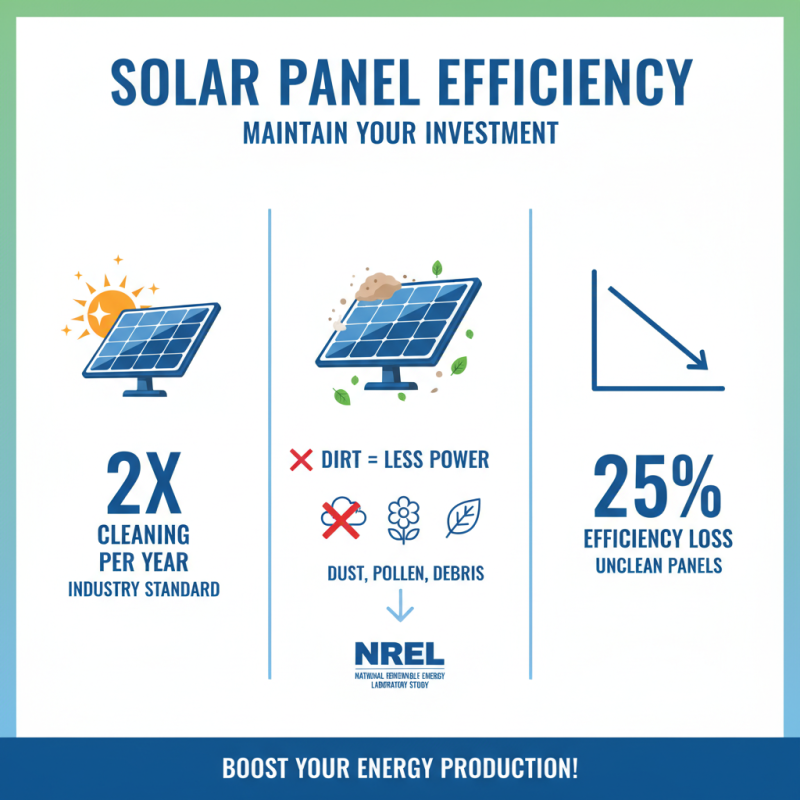
Maintaining solar panels is crucial for their efficiency. Industry standards recommend cleaning them at least twice a year. Dust, pollen, and debris can significantly impact energy production. A study by the National Renewable Energy Laboratory shows that unclean panels can lose up to 25% of their efficiency.
In areas with heavy rainfall, you might need less frequent cleaning. However, in dry or dusty regions, quarterly cleaning could be essential. Monitoring your panel's performance regularly helps determine your specific needs. Wind and bird activity can create additional challenges.
Many homeowners overlook the importance of cleaning duration and costs. Some services may take only an hour, but choosing the right methods is vital. If the wrong chemicals are used, it may damage the panels. Investing in professional services may be beneficial, but costs vary widely. Always research the best options for your location and situation.
Best Practices for Identifying and Repairing Common Solar Panel Issues
Maintaining your solar panels is essential for their efficiency. Identifying issues early can save time and money. Common problems include dirt buildup, shading, and panel damage. Regular checks can help spot these issues.
Tips for maintenance include cleaning panels with water and a soft brush. Don’t use harsh chemicals. Clear debris, like leaves or snow, to ensure sunlight reaches the panels. Inspect for cracks or loose wiring. These small problems can lead to bigger ones if ignored.
Keep an eye on your energy output. A sudden drop might indicate a problem. Be proactive in addressing these changes. Remember, even minor issues deserve attention. Regular maintenance can prolong life and efficiency, ensuring you get the most from your investment.
2026 Top Solar Maintenance Tips You Need to Know
| Issue |
Symptoms |
Best Practice |
Repair Method |
| Reduced Energy Output |
Lower than expected performance |
Regular performance monitoring |
Cleaning panels and checking connections |
| Visible Damage |
Cracks or discoloration |
Visual inspections after storms |
Replace damaged panels |
| Inverter Issues |
Error codes or shutdowns |
Monitor inverter readings regularly |
Reset or replace the inverter |
| Overheating |
High temperature readings |
Ensure proper ventilation |
Check for shading and obstructions |
| Dust and Debris |
Loss of efficiency |
Routine cleaning schedule |
Soft brush or hose cleaning |
Maximizing Efficiency: The Role of Monitoring Systems in Solar Maintenance
Monitoring systems play a crucial role in solar maintenance. These systems can significantly enhance the efficiency of solar panels. According to a report by the National Renewable Energy Laboratory, regular monitoring can improve energy production by up to 30%. This increase comes from quick identification of potential issues.
Effective monitoring helps detect underperformance. Solar panels may not always operate at their peak. Dirt, shading, and damage can reduce their efficiency. A study shows that systems without monitoring delay problem detection by an average of six months. This delay can lead to substantial energy loss.
Investing in robust monitoring solutions is essential. They allow for real-time alerts and performance tracking. However, many users overlook this aspect. They often rely on periodic checks, which may not be enough. Frequent inspections can be costly and time-consuming. Yet, without advanced monitoring, the risk of significant inefficiencies remains high.
2026 Solar Maintenance Efficiency Analysis