As energy costs rise, many homeowners are turning to solar electricity. This renewable energy source offers numerous benefits. It can lower your electricity bills and reduce your carbon footprint. However, the transition to solar electricity is not without challenges.
Installing solar panels requires careful planning. You need to consider your home's orientation and sunlight exposure. Not all roofs are suitable for solar installations. Additionally, the initial investment can be daunting. Many people hesitate, unsure if the long-term savings are worth it. It is crucial to evaluate local incentives and financing options.
Once installed, solar electricity can power your home efficiently. You can choose to connect to the grid or use battery storage. Yet, maintenance is vital. Regular checks ensure optimal performance. Homeowners should remain informed about updates in technology and local regulations. Embracing solar electricity is a commitment that requires thought and planning.
Understanding solar electricity is essential for homeowners considering renewable energy.
Solar panels convert sunlight into electricity. This process is called photovoltaic conversion. Homeowners can harness this clean energy to power daily activities.
A typical solar panel installation includes several components: panels, inverters, and mounting systems.
The choice of panels and inverters is crucial. Not all equipment is created equal. Some may not be efficient enough for your needs. Researching options can be overwhelming.
Installation may require permits and inspections, adding to the complexity. It's also important to remember maintenance; panels need occasional cleaning. Dust and debris can reduce their effectiveness.
Homeowners must consider energy consumption patterns. Analyzing usage can offer insights into the size of the system needed.
Some may underestimate their electricity needs, leading to insufficient power generation. Others might overestimate and invest unnecessarily. Size and efficiency go hand in hand in optimizing solar energy usage.
When considering solar electricity for your home, pay attention to the types of solar panels available. Monocrystalline and polycrystalline panels both have their strengths. Monocrystalline panels are made from a single crystal structure, making them more efficient. They usually require less space than polycrystalline options. However, these panels can be pricier.
On the other hand, polycrystalline panels consist of multiple crystal structures. They are generally more affordable but slightly less efficient. This difference might impact your energy output. Polycrystalline panels can be a good choice for larger spaces, where efficiency is less critical.
Both options have pros and cons. Monocrystalline panels look sleek and save space, but the cost is a factor. Polycrystalline panels can affect your home’s aesthetics. Choosing the right type involves balancing efficiency with budget and space. Think carefully about which features matter most to you.
Calculating your energy needs is crucial when considering solar electricity for your home. Start with your monthly electricity bill. This bill gives you a clear idea of how much energy you consume. Check the
average kilowatt-hours (kWh) used each month. Note any seasonal changes in usage; summer might require more energy for cooling. This is your baseline.
Next, identify which appliances and systems draw the most power. Large devices, like HVAC systems, can significantly impact your energy requirements. Create a list of their wattage. For a more precise estimate, consider using a power meter to measure energy consumption directly. After you have a clear picture, you can start sizing your solar system.
However, it’s important to remember that these calculations may not be perfect. Factors like weather conditions and energy efficiency can fluctuate. Be prepared for adjustments as you observe your solar system’s performance over time. Regularly reviewing your energy usage can help ensure your solar setup meets your needs effectively. It’s a continuous process of learning and adapting.
Financial incentives are vital for homeowners considering solar electricity. Tax credits can significantly reduce installation costs. For instance, a credit may cover a percentage of your solar investment. This means you could pay less upfront. Many states also offer rebates. These can further increase savings on solar systems. Each state's program varies. Thus, it’s crucial to research the options available in your area.
However, navigating these financial incentives can be challenging. Requirements often change, and deadlines can be confusing. Not every homeowner will qualify for every incentive. It's essential to keep track of updates. Additionally, some incentives may require paperwork that could be overwhelming. This could lead to missed opportunities if not managed correctly. It’s wise to consult professionals who specialize in these matters. Their guidance can help ensure you maximize your savings and avoid pitfalls. Taking the time to understand these incentives will pay off in the long run.
| Incentive Type | Description | Estimated Savings | Eligibility Criteria |
|---|---|---|---|
| Federal Tax Credit | A tax credit for residential solar PV systems, allowing a percentage of the installation cost to be deducted from federal taxes. | 26% of installation cost | Available for systems installed before December 31, 2023 |
| State Tax Credit | State-specific tax credits that provide additional savings based on local regulations. | Varies by state (up to 15%) | Must comply with state guidelines for eligibility |
| Solar Renewable Energy Certificates (SRECs) | Certificates earned for producing solar electricity, which can be sold for cash or credits. | $15 - $50 per SREC (varies by state) | Must be connected to the grid and meet local regulations |
| Utility Rebates | Rebates offered by local utilities to incentivize solar installation. | Up to $1,000 or more, depending on the utility | Dependent on utility programs and availability |
| Property Tax Exemption | Exempts solar panel installation increase from property tax assessments. | Varies by local regulations | Eligibility may depend on state and local laws |
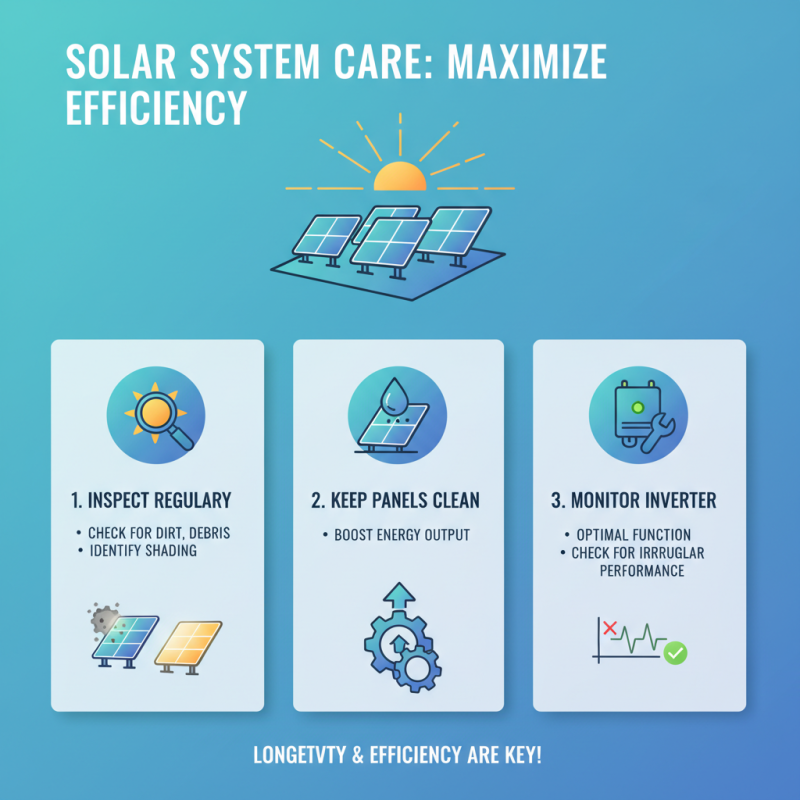
Maintaining your solar system is crucial for its longevity and efficiency. Regular inspections help identify potential issues. Check for dirt, debris, and shading on solar panels. A clean panel can boost energy output significantly. Monitor your inverter to ensure it is functioning optimally. If you notice irregular performance, it’s an indicator that something might be wrong.
Tracking energy usage is also essential. Use monitoring tools to analyze daily energy production. It helps in understanding patterns and making adjustments. If you find your usage exceeds production consistently, reflect on your energy habits. Consider upgrading appliances or adding energy storage solutions. Sometimes our expectations do not match reality.
Keeping an eye on structural integrity is equally important. Solar panels should be securely mounted. Strong winds or severe weather can cause damage. Regularly inspect mounts and supports. If you find signs of wear, contact a professional. Ignoring these aspects can lead to costly repairs down the road. Commitment to maintenance ensures that your solar system performs at its best.