Skip to content

Top Solar Power Providers for Global Buyers

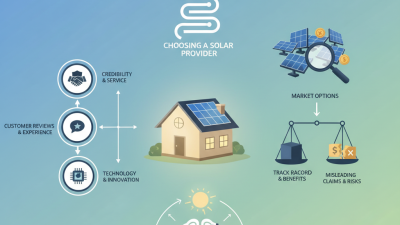
Choosing reliable solar power providers is no longer a simple price comparison. Global buyers must examine technology, project experience, financing strength, and after-sales support. A low quotation may hide shipping delays, unclear warranties, or expensive replacement parts.

This guide introduces leading solar power providers serving international markets. It considers manufacturers, engineering companies, and integrated energy firms. Their capabilities may differ widely. Some specialize in utility-scale solar farms, while others focus on commercial rooftops or off-grid systems. Buyers should compare module efficiency, inverter compatibility, degradation rates, and expected energy output under local weather conditions.

Quality varies. Details matter.

A credible provider should explain certification, testing procedures, supply capacity, and warranty claims in clear language. Independent performance records and references from completed projects can reveal more than polished brochures. Buyers should also review delivery terms, local installation partners, grid requirements, and technical support during the system’s operating life. A supplier with strong equipment may still perform poorly without dependable service.

This overview does not treat any company as perfect. No shortlist is flawless, and market conditions change quickly. Currency movements, policy revisions, port congestion, and raw material costs can affect final project value. Careful buyers should verify current documents and request project-specific proposals before signing agreements. With practical due diligence, professional advice, and transparent communication, international purchasers can identify solar power providers that offer dependable performance rather than attractive promises alone.
Top Solar Power Providers for Global Buyers

Understanding the Global Solar Power Provider Market

The global solar power provider market includes manufacturers, engineering firms, project developers, and regional service teams. Buyers must understand how these roles differ before comparing offers. A provider may supply panels but lack installation experience. Another may manage design, permits, storage, and long-term maintenance.

Market conditions vary sharply by region. Grid reliability, sunlight levels, import rules, and financing costs influence project design. Experienced providers use local irradiation data and realistic load profiles. They should explain expected energy output across seasons, not only display peak figures. Prices rarely tell everything. Warranty terms, equipment availability, and response times can affect total ownership costs.

Reliable buyers examine test reports, quality management records, and compliance with recognized electrical standards. They also request references for projects with similar climates and system sizes. Clear documents should identify product degradation, replacement procedures, monitoring access, and service responsibilities. Freight planning matters too; damaged equipment at a remote site can delay work for weeks. Data can be uneven. Some providers present optimistic forecasts, while buyers may overlook shading, dust, or weak grid connections. A careful technical review, independent performance checks, and staged payments can reduce these risks. The market is improving, but its information is not always equally transparent.

Comparing Solar Technologies, Products, and Service Models

Global buyers compare more than panel prices. Solar technology determines yield, maintenance, and land use. Monocrystalline silicon panels suit constrained rooftops and strong sunlight. Bifacial modules can capture reflected light from pale roofs or gravel. Their advantage weakens when surfaces are shaded or dusty. Thin-film products tolerate some heat better, but usually need more space. Real project data matters more than a laboratory efficiency figure.

Product selection should include inverters, batteries, mounting systems, monitoring, and replacement terms. A battery may support evening loads, yet its usable capacity falls with age. Buyers should request degradation curves, safety certifications, warranty exclusions, and local testing records. A ten-year warranty sounds strong. Read the service conditions. An installer may require remote diagnostics before approving a claim. That detail can affect downtime in a rural site.

Service models change financial and operational risk. An engineering, procurement, and construction contract offers one delivery route, but scope gaps can create disputes. Leasing reduces upfront spending, while ownership remains with the provider. A power purchase agreement charges for generated electricity, often with index-linked prices. These models require careful review of insurance, roof access, maintenance response, and end-of-term removal. Field reviews often reveal hidden cleaning assumptions and grid-upgrade costs. That is an uncomfortable lesson. Independent yield estimates, site inspections, and references from comparable climates improve confidence. Still, weather, tariffs, and installation quality can overturn the spreadsheet.

Top Solar Power Providers for Global Buyers - Comparing Solar Technologies, Products, and Service Models

Technology or Solution Typical Commercial Performance Main Product Formats Key Advantages Primary Limitations Best-Fit Buyer Profile Common Service Model
Monocrystalline Silicon PV Approximately 20–23% module efficiency; typical annual degradation is about 0.3–0.5% depending on product design and operating conditions. Rooftop modules, ground-mounted utility modules, high-power commercial modules, and integrated PV systems. High energy yield per square metre, broad global supply, mature manufacturing, and extensive installer experience. Requires more material and energy than thin-film alternatives; output is affected by shading, heat, and soiling. Residential, commercial, industrial, and utility-scale buyers seeking a widely bankable technology. Equipment supply, engineering-procurement-construction, turnkey delivery, and long-term operation and maintenance.
Bifacial Silicon PV Front-side module efficiency commonly falls within approximately 20–23%; rear-side energy gain is often about 5–20%, highly dependent on albedo, mounting height, spacing, and site layout. Utility-scale modules, elevated commercial arrays, tracker systems, and high-reflectance ground installations. Higher site energy yield without proportionally increasing the land footprint; well suited to reflective surfaces and trackers. Additional output is site-dependent; requires careful structural, electrical, and shading analysis. Large commercial and utility buyers with suitable ground conditions and professional design resources. Turnkey EPC, performance modelling, tracker integration, commissioning, and preventive maintenance.
Thin-Film PV Approximately 10–20% module efficiency, depending on the thin-film material and product architecture; some designs perform relatively well under high temperatures and diffuse light. Large utility modules, lightweight modules, building-integrated products, and selected industrial rooftop systems. Potentially lower temperature sensitivity, flexible form factors for selected products, and good performance in some low-light environments. Lower power density can require more land or roof area; supply availability and recycling requirements vary by material. Projects with ample space, hot climates, diffuse sunlight, lightweight requirements, or specialized building constraints. Project-specific engineering, direct equipment supply, EPC delivery, and asset-management contracts.
Perovskite-Silicon Tandem PV Pilot and early commercial products are generally positioned above conventional silicon efficiency; long-term field performance and bankability remain less established than mature PV technologies. Pilot-scale modules, demonstration systems, research installations, and early premium products. Potential for higher efficiency by capturing different portions of the solar spectrum; may reduce area requirements for constrained sites. Limited operating history, developing manufacturing capacity, uncertain lifecycle economics, and evolving durability standards. Innovation-focused buyers, pilot projects, research organizations, and sites where space has a high economic value. Demonstration contracts, technology partnerships, staged procurement, and enhanced technical due diligence.
Solar PV with Battery Storage Lithium-ion systems commonly achieve approximately 85–95% round-trip efficiency at the system level; usable capacity, cycle life, and operating temperature affect actual results. Residential batteries, commercial peak-shaving systems, microgrids, and utility-scale energy-storage plants. Improves self-consumption, supports backup power, reduces peak demand, and can provide grid-support services where regulations permit. Higher upfront cost, capacity degradation, thermal-management requirements, and dependence on local interconnection rules. Buyers with time-of-use tariffs, unreliable grids, backup-power needs, or demand-charge exposure. Energy-as-a-service, turnkey EPC, software-enabled asset management, warranty support, and performance-based contracts.
Turnkey EPC Solar Provider Performance depends on the selected PV technology, system design, climate, availability, degradation, and operating practices rather than on the service model alone. Design, permitting, procurement, construction, grid connection, commissioning, monitoring, and documentation. Single-point responsibility, coordinated delivery, defined completion milestones, and simplified project administration. Contract quality varies; buyers must review exclusions, liquidated damages, warranties, local-content rules, and acceptance testing. Commercial, industrial, infrastructure, and utility buyers seeking an integrated project delivery route. Fixed-price EPC, design-build, multi-year O&M, availability guarantees, and performance-linked warranties.
Power Purchase Agreement Provider The buyer typically pays for delivered electricity over a contract term; pricing and savings depend on resource quality, tariff structure, financing, and contract terms. On-site solar, off-site solar, solar-plus-storage, and portfolio-based renewable electricity contracts. Can reduce upfront capital requirements and provide price visibility over a contracted period. Long-term contractual obligations, credit requirements, volume risk, regulatory complexity, and possible termination fees. Organizations with predictable electricity demand, limited capital budgets, and sustainability or renewable-energy targets. Energy-as-a-service, build-own-operate, contracted energy supply, and third-party financing.
Data note: Performance ranges are indicative global-market values and vary by product design, test conditions, climate, system configuration, and project quality. Buyers should verify certified datasheets, degradation assumptions, safety compliance, warranty terms, lifecycle costs, local incentives, import requirements, and grid-connection rules before procurement.

Assessing Provider Quality, Certification, and Project Experience

For global buyers, provider quality is more than a polished proposal. It is visible in engineering records, test documents, and site behavior. IRENA’s Renewable Capacity Statistics 2025 recorded 585 GW of renewable capacity added in 2024. Solar contributed about 452 GW, making supplier discipline increasingly important. Large volumes can hide uneven workmanship. That risk deserves attention.

Certification is a useful filter, not proof of excellence.

Buyers should verify current IEC 61215 and IEC 61730 test evidence for modules, plus ISO 9001 controls for manufacturing quality. ISO 14001 can clarify environmental management, but it cannot validate every project claim. Check certificate scope, issuing body, expiry date, and factory location. Copies alone are weak evidence. Ask for serial-level traceability and independent inspection reports.

Project experience should match the proposed climate and system design.

Request operating data from comparable sites, including yield, availability, degradation, and corrective-action history. The IEA’s Renewables 2024 report projects solar PV to provide about 80% of renewable capacity expansion through 2030. Experience is measurable, not decorative. Compare P50 and P90 estimates with monitored output under heat, dust, snow, or coastal corrosion. A five-year reference may reveal more than a twenty-year promise.

I would still challenge optimistic warranties. They often depend on exclusions, installation quality, and maintenance response times. This is where due diligence becomes practical. Not glamorous, but necessary.

Reviewing Regional Coverage, Pricing, and Delivery Capabilities

Top Solar Power Providers for Global Buyers

Regional coverage now matters as much as panel efficiency. The International Energy Agency reports that solar PV supplied about three-quarters of new renewable capacity added in 2023. Buyers should therefore compare providers by local inventory, certified installers, and replacement-part access. A supplier serving ports in Europe may still struggle with inland delivery across East Africa or Latin America. Delivery promises need evidence, not polished brochures.

Pricing also requires careful reading. IRENA’s Renewable Power Generation Costs in 2023 placed utility-scale solar PV’s global weighted average electricity cost at about $0.044 per kilowatt-hour. That figure does not equal a buyer’s final project cost. Freight, import duties, insurance, currency changes, storage, and grid connection can alter the budget sharply. Request both FOB and delivered quotations. Check warranty coverage in the destination country.

Delivery reliability depends on infrastructure and customs performance. The World Bank’s Logistics Performance Index 2023 shows wide differences in clearance efficiency, transport quality, and shipment tracking between markets. Providers with regional warehouses may reduce delays, but inventory can become outdated or incomplete. That is an uncomfortable trade-off. A lower price can hide longer lead times. Buyers should test delivery claims against recent shipment records, damage rates, and documented response times. Forecasts are useful, but they are not guarantees.

Selecting a Solar Power Provider for Different Buyer Needs

Selecting a solar power provider starts with the buyer’s operating reality, not a glossy capacity claim. A household needs safe installation, clear financing, and responsive maintenance. A factory needs predictable output, grid studies, and protection against production delays. An off-grid project needs battery compatibility and spare parts that can arrive quickly.

The market is expanding rapidly. IRENA’s Renewable Capacity Statistics 2024 reports 346 gigawatts of new solar capacity added globally in 2023. This scale creates more choices, but also more uneven quality. Buyers should request third-party test reports, audited performance data, and references from similar climates. Ask for evidence. A provider should explain module degradation, inverter replacement terms, and expected annual yield in plain language. Promises without assumptions are weak evidence.

Price comparisons must include the full ownership period. The IEA PVPS Trends 2024 report shows continued growth in distributed and utility-scale photovoltaics, yet grid connection remains a practical constraint in many markets. A low bid can become expensive when approvals, transformer upgrades, or delayed components are excluded. Buyers should compare levelized energy costs, warranty response times, insurance coverage, and local service capacity. For coastal sites, inspect corrosion protection. For dusty regions, examine cleaning access and soiling assumptions. Some forecasts still look too optimistic. Real weather, permitting friction, and imperfect maintenance deserve a conservative sensitivity analysis.