Choosing among solar system providers is not just a price comparison. A complete system must suit the site, local climate, energy demand, and available installation support. For global buyers, those details can vary widely between markets. A rooftop in a sunny, dusty region may need different equipment and maintenance planning than a home facing frequent cloud cover.
This guide examines ten providers through practical considerations: product range, system compatibility, warranty terms, technical documentation, delivery options, and after-sales service. It also considers whether a company clearly explains its inverters, batteries, and monitoring tools. Details matter. A low quoted price may not include shipping, installation, or ongoing support, so buyers should check what each offer actually covers. Product availability and service can change by country, too.
No provider is the best fit for every project. That is worth remembering. The comparisons can help narrow a shortlist, but they cannot replace a site assessment or independent review of local requirements. Buyers should confirm specifications and warranty conditions directly with each provider before committing. Some information may be harder to compare than it looks. Still, asking clear questions about performance, maintenance, and support can make the decision more grounded.
Solar system providers are businesses that help customers turn sunlight into usable electricity. Their work may include assessing a site, selecting panels and inverters, arranging batteries, and coordinating installation. Some also provide monitoring, maintenance, and technical support after the system is running. The exact scope varies, so buyers should check what a proposal actually includes. Details matter.
Global buyers include homeowners, farms, factories, construction firms, and organizations operating remote sites. A household may need backup power during outages, while a cold-storage facility may prioritize steady daytime generation. Buyers also work across different climates, grid conditions, shipping routes, and service networks. A system suited to a sunny warehouse may need changes for a coastal home exposed to salt and strong winds.
For international projects, providers may support equipment selection, documentation, logistics, and coordination with local installers. Buyers can compare technical specifications, stated performance assumptions, warranty terms, and access to replacement parts. Ask who handles commissioning and whom to contact when an inverter shows a fault code. Not always obvious. A low purchase price can look attractive, but limited local support may add delays later. Even careful evaluations can miss practical details, such as whether maintenance teams can reach a distant site.
Global solar buyers should compare providers on evidence, not polished efficiency claims. IEA PVPS’s Trends in Photovoltaic Applications 2024 estimated that about 456 GW of solar capacity was installed worldwide in 2023. That scale makes consistency, traceable testing, and dependable support essential. Ask for module test results, temperature coefficients, and performance data from comparable climates. Technology labels can change quickly. Measured results matter more.
Check whether modules and inverters carry relevant IEC 61215 and IEC 61730 certifications, and confirm that certificates match the exact products offered. NREL’s review of photovoltaic system performance reported a median module degradation rate of roughly 0.5% per year. Treat that figure as a benchmark, not a promise for every roof or climate. Details matter. Compare product and performance warranties separately, including exclusions, claim procedures, and who pays for labor or shipping. A long warranty can look reassuring on paper, yet mean little if local technicians, replacement parts, or clear response times are missing. I would also ask providers to explain commissioning checks and post-installation monitoring in plain language. That conversation may expose gaps, including ones buyers overlook.
IEA’s 2023 record of 407 GW in new solar PV capacity shows how quickly demand is growing. For global buyers, that figure points to a larger pool of projects, suppliers, and equipment needs. A utility-scale site may require thousands of modules, inverters, and coordinated delivery slots. A commercial rooftop project has different constraints, including roof loading and limited installation space. Demand is real. But a global total does not tell buyers which system fits their location.
The number also needs context. Annual additions can hide uneven growth between regions, delays in grid connections, and differences in local sunlight. Buyers should compare providers on documented system performance, product warranties, installation experience, and after-sales support. Ask for clear yield estimates based on local weather, not just ideal conditions. Check whether the proposed inverter and storage options match the site’s daily load. I would not treat 407 GW as a buying signal by itself. It is a market indicator, not a project plan, and even careful estimates can miss practical details. A clear proposal should explain those assumptions.
A useful global shortlist should compare regional strengths, not just panel wattage. The ten provider profiles below reflect distinct product portfolios buyers may encounter. In China, one profile offers modules, inverters, batteries, and utility-scale equipment under coordinated supply. Another focuses on high-volume module exports, with broad format choices but less project support overseas. In India, a domestic provider may pair rooftop panels with hybrid inverters suited to variable grid conditions. A Southeast Asian exporter can offer flexible module assembly and regional shipping, though buyers should check warranty service locally. Japan’s residential-focused profile often emphasizes compact systems, tidy installation, and home energy controls. Korean suppliers may stand out for high-efficiency modules and storage integration. Details matter.
Europe presents two different profiles: an integrated supplier combining modules, inverters, and monitoring, and an engineering-led provider focused on system design and commercial projects. In the United States, a utility-scale specialist may supply large-format modules and project components, while a residential provider may bundle rooftop equipment with batteries and monitoring software. Across parts of Africa, an off-grid specialist may offer durable panels, charge controllers, and modular battery kits for remote sites. These descriptions are comparison categories, not a verified ranking of named firms. Ask each candidate for region-specific references, product datasheets, degradation figures, and written service terms. A polished brochure is not proof of long-term support. Check what happens when a replacement part is needed three years later.
Comparison note: The profiles below are anonymized regional provider archetypes, not named companies or a verified ranking. They summarize common product and project capabilities found in each market; offerings vary by supplier and should be confirmed during procurement.
| Profile | Primary Region | Typical Product Portfolio | Common Project Focus | Typical Buyer Fit | Key Due-Diligence Checks |
|---|---|---|---|---|---|
| Provider 1 High-volume PV manufacturer |
China | Crystalline-silicon PV modules; some suppliers also offer cells, inverters, batteries, or complete system packages. | Utility-scale and commercial projects, with export-oriented module supply. | Buyers prioritizing large production capacity, broad module selection, and international sourcing options. | Module certification for the destination market, factory and supply-chain audits, product warranties, shipping terms, and applicable trade measures. |
| Provider 2 Domestic manufacturing and EPC supplier |
India | PV modules and, depending on supplier, engineering, procurement, and construction (EPC) services and project support. | Utility-scale installations, commercial systems, and rooftop projects serving a large domestic market. | Buyers seeking regional manufacturing, local project execution, or suppliers familiar with Indian standards and operating conditions. | Manufacturing origin, applicable domestic-content rules, grid-code compliance, EPC scope, and service coverage in the project location. |
| Provider 3 Residential energy-system specialist |
Japan | Rooftop PV systems, residential batteries, hybrid power-conversion equipment, and home energy-management solutions. | Residential and small commercial installations, including systems designed for space-constrained sites. | Homeowners, property operators, and installers looking for integrated solar-plus-storage and energy-management options. | Compatibility among modules, inverters, and batteries; local electrical approvals; warranty conditions; and installer or maintenance availability. |
| Provider 4 PV and storage solutions supplier |
South Korea | PV modules and, for some suppliers, battery energy-storage products or integrated energy solutions. | Commercial, industrial, and utility projects where storage may complement solar generation. | Buyers evaluating solar and storage together or seeking suppliers with experience in advanced electrical systems. | Battery chemistry and safety certifications, inverter and energy-management compatibility, system warranties, and local technical support. |
| Provider 5 Rooftop and storage integrator |
Germany | Rooftop PV packages, inverters, residential batteries, monitoring, and energy-management components, often assembled from multiple manufacturers. | Residential and commercial rooftop systems, including self-consumption and solar-plus-storage projects. | Buyers seeking system design, installation coordination, and service within Germany or nearby European markets. | Component interoperability, grid-connection requirements, installer qualifications, performance assumptions, and after-sales responsibilities. |
| Provider 6 Utility-scale project developer and EPC |
Spain | Project development, EPC delivery, operations and maintenance (O&M), and integration of modules, inverters, and mounting systems from selected suppliers. | Large ground-mounted solar plants and projects serving European and international markets. | Utilities, infrastructure investors, and project owners seeking development or turnkey construction services. | Permitting and land rights, grid-connection status, construction schedule, contracted performance guarantees, and long-term O&M scope. |
| Provider 7 Integrated solar and storage provider |
United States | PV modules, inverters, batteries, system design, installation, or EPC services; portfolio depth differs by supplier. | Residential, commercial, and utility-scale projects, with solutions tailored to state and utility requirements. | Buyers needing local installation or service networks and system designs aligned with U.S. electrical and interconnection rules. | Interconnection requirements, equipment listings, warranty issuer, installer credentials, domestic-content claims where relevant, and service response terms. |
| Provider 8 North American project supplier |
Canada | PV modules or project-development and EPC services; some suppliers also coordinate inverters, mounting, and storage from partner manufacturers. | Utility and commercial projects, including systems designed for cold-weather and seasonal operating conditions. | Project owners seeking North American sourcing, regional development experience, or support for Canadian grid-connected projects. | Snow and wind-load design, cold-weather performance assumptions, provincial permitting, grid studies, and the division of responsibility among suppliers. |
| Provider 9 Distributed-generation and EPC supplier |
Brazil | PV modules, string inverters, mounting equipment, system design, and EPC or distribution services, depending on the supplier. | Commercial and industrial rooftops, distributed generation, and selected utility-scale projects. | Businesses and project developers seeking local-market knowledge and equipment or construction support in Brazil. | Grid-connection process, local certification and import requirements, Portuguese-language documentation, logistics, and regional maintenance coverage. |
| Provider 10 Large-project solar and EPC specialist |
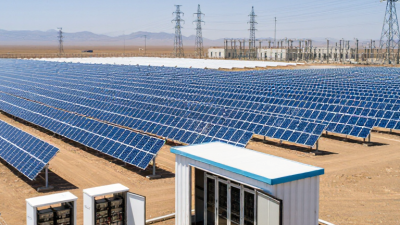
United Arab Emirates and Gulf region | Utility-scale PV development or EPC, with modules, inverters, mounting structures, and optional storage sourced for project requirements. | Large ground-mounted plants in hot, dry environments, including projects that may use bifacial modules or tracking systems. | Utilities, governments, and infrastructure investors planning large projects in the Gulf or other high-irradiance regions. | Heat and dust performance, cleaning strategy, water use, tracker suitability, grid studies, local contracting requirements, and long-term O&M capacity. |
The right solar provider depends on the project, not a global ranking. A warehouse with a broad, unshaded roof needs different engineering from a remote clinic with limited grid access. Compare proposed system capacity, expected energy output, storage needs, and installation schedule against your site’s actual load data. Ask how estimates account for seasonal sunlight, shading, and equipment downtime. Small details matter.
Local rules can change both design and cost. Check who handles permits, grid-connection studies, inspections, and required electrical documentation. Ask for examples of comparable projects in the same region, and confirm which local contractors will install and service the equipment. A polished proposal is not proof that every approval is secured. Requirements can also change, so verify them with relevant local authorities or qualified advisers.
Compare lifecycle costs, not just the purchase price. Include installation, monitoring, maintenance visits, inverter replacement, battery degradation, and warranty conditions. Request clear assumptions behind savings forecasts, including electricity rates and expected system performance. Still, spreadsheets can make uncertain outcomes look precise. Ask what happens if output falls short, service response is delayed, or replacement parts take weeks to arrive. A provider’s service plan should be specific enough to check, yet flexible enough for real operating conditions.